Bikini-Haus, Cultural heritage building in Charlottenburg, Germany
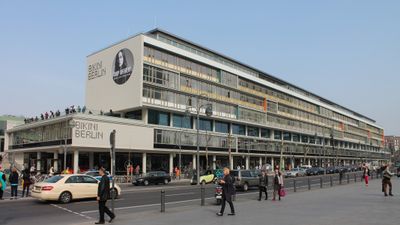
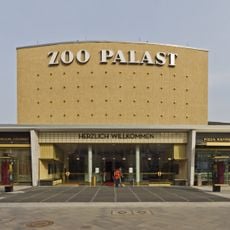
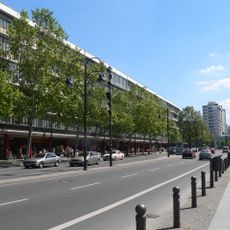
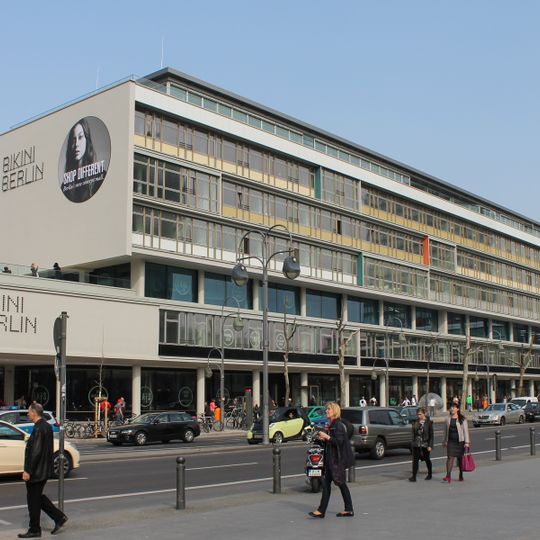
The Bikini-Haus is a modern commercial and office building in Berlin with an unusual architectural form. The structure extends roughly 200 meters along Budapester Strasse and houses 64 retail spaces, multiple dining establishments, and office areas that occupy the upper floors.
Architects Paul Schwebes and Hans Schoszberger completed the Zentrum am Zoo complex in 1957 using Marshall Plan funding for post-war reconstruction. The project was part of efforts to rebuild and modernize West Berlin after 1945.
The nickname comes from the building's original layout: shops on the ground and first floors, production halls on the third to fifth, and an open "air floor" between them, summed up in Berlin dialect as "oben watt, unten watt und inner Mitte nüscht". Around 700 sewing machines made women's outerwear here, and by the late 1960s more than 60 fashion firms occupied the house. The open floor was glazed in around 1978 to house the Staatliche Kunsthalle Berlin.
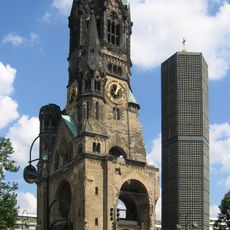
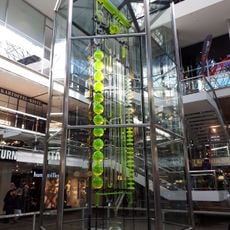
The Bikini-Haus stands on Budapester Straße, with Breitscheidplatz and the Kaiser-Wilhelm-Gedächtniskirche to the south and the Zoological Garden to the north. A 7,000-square-metre rooftop terrace on top of the building, modelled on New York's High Line, looks over the zoo, the square and the church. The complex was gutted and rebuilt between 2010 and 2014, so the interior is a new two-level mall passage rather than the 1950s layout.
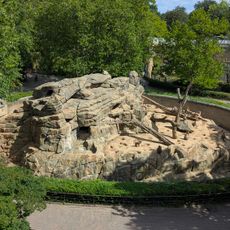
A large rooftop terrace of about 7,000 square meters lets visitors look directly into the adjacent zoo exhibits and see the animals up close. The space is used for temporary retail installations and changing events throughout the year.
The community of curious travelers
AroundUs brings together thousands of curated places, local tips, and hidden gems, enriched daily by 93,244 contributors worldwide.