Schloss Dhaun, Medieval castle in Hochstetten-Dhaun, Germany.
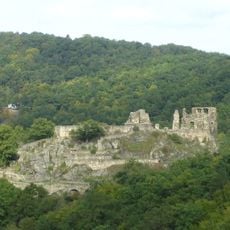
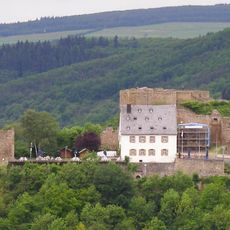
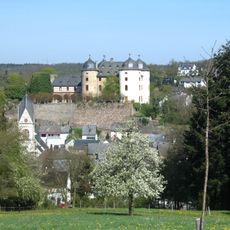
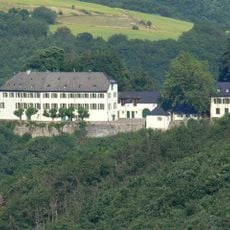
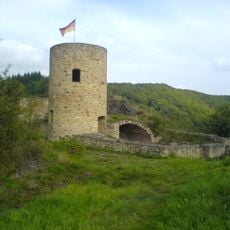
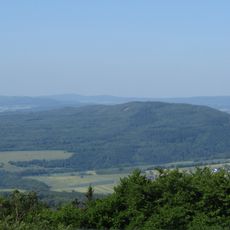
Schloss Dhaun is a castle complex in Hochstetten-Dhaun, Germany, sitting on a ridge high above the Kellenbach valley and listed as a cultural heritage monument. It follows a horseshoe-shaped layout with several wings joined by covered passages and surrounded by open grounds.
The site was first recorded in 1215 as a defensive fortress overlooking the Kellenbach valley. In 1729, the local nobility chose to convert it into a baroque residence, shifting its purpose away from military use.
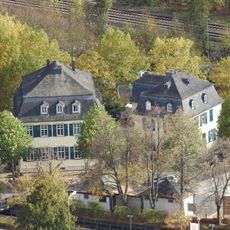
The name Dhaun derives from "castrum de Dune", recorded in 1215 and meaning the castle on the height. Since 1957 the rebuilt west wing has housed the Heim-Volkshochschule Schloss Dhaun, an adult education centre; the Rittersaal, built by the Kirn manufacturer Simon over the ruins of the north wing, is used for festivities. The sculptor Robert Cauer the Elder made the Prometheus figure in Rome in 1888.
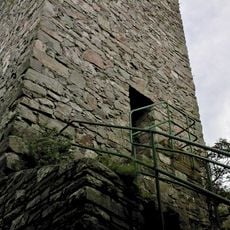
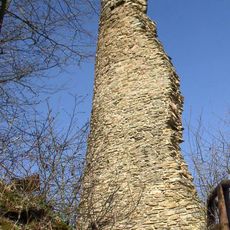
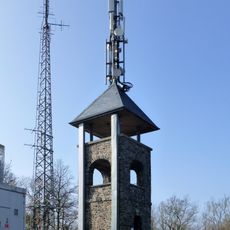
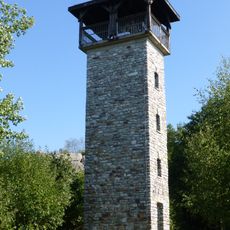
The site is reached from Hochstetten-Dhaun, high above the Kellenbach valley. The upper castle holds the ruins of St. George's Chapel, the kitchen house, two bastions and the ring wall with watchtowers and gate; the west wing houses the Heim-Volkshochschule. The Rittersaal in the lower castle is used for festivities, and the district runs a youth education centre there.
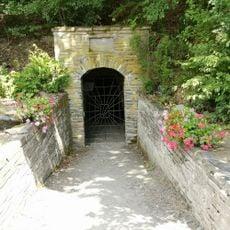
A network of underground passages runs beneath the complex, connecting different parts of the buildings and dating back to the medieval period. These hidden routes show how much care went into planning internal movement and security within the site long before the baroque conversion.
The community of curious travelers
AroundUs brings together thousands of curated places, local tips, and hidden gems, enriched daily by 93,292 contributors worldwide.