Burg Koppenstein, Medieval castle ruins in Hunsrück, Germany
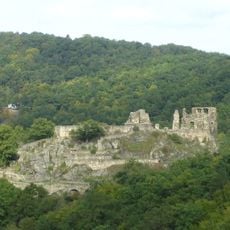
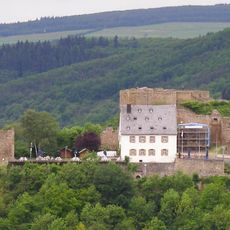
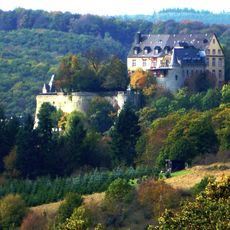
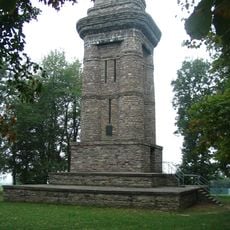
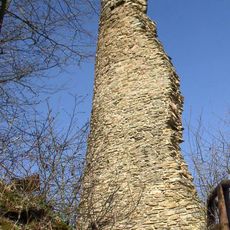
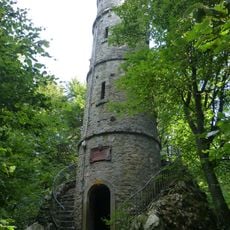
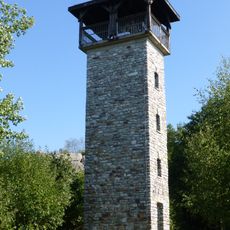
Burg Koppenstein is a castle ruin in the Hunsrück region of the Rhein-Hunsrück-Kreis district in Germany, centered around a pentagonal tower that still stands above the remaining foundation walls. Deep defensive ditches cut into the rock surround the site and give a clear sense of how large and carefully laid out the original fortification was.
The hill was already mentioned in the 12th century, and older earthworks hint at earlier use, but the visible ruins were built by the Counts of Sponheim after 1325. In 1330 the settlement at the foot of the castle received town rights. By the Thirty Years' War at the latest, castle and town were abandoned and fell into decay.
The noble family von Koppenstein took its name from the castle; it descended from an illegitimate son of Count Johann II of Sponheim-Kreuznach (died 1340) and held substantial castle fiefs from the County of Sponheim. Its coat of arms showed a raven in red on a blue-and-gold chequered field. The last male bearer, Jakob Adolf von Koppenstein (died 1768), made Damian Freiherr Schenk von Schmidtburg his heir; the ruins and castle district now belong with Schloss Gemünden to the Schmidtburg descendants, the Freiherren von Salis.
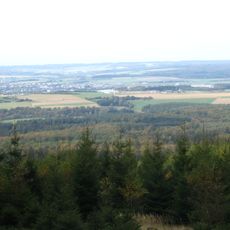
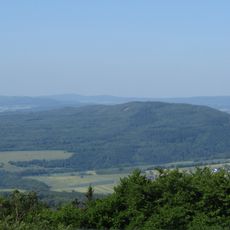
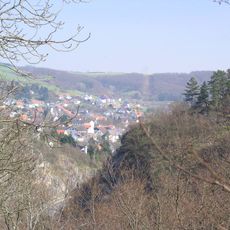
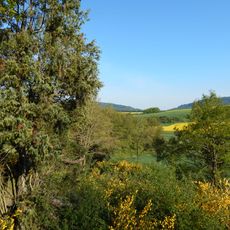
The site is freely accessible and the pentagonal tower can be climbed for a view over the surrounding Hunsrück landscape. Sturdy footwear is a good idea since the ground is uneven in places and the ditches around the ruins have some unguarded edges.
The pentagonal shape of the tower is unusual in German castle architecture, where round or square towers were far more common in the medieval period. This form was chosen deliberately to reduce the number of vulnerable corners that attackers could exploit at the base of the tower.
The community of curious travelers
AroundUs brings together thousands of curated places, local tips, and hidden gems, enriched daily by 93,402 contributors worldwide.