Booser Doppelmaar, Volcanic maar formation in Boos, Germany
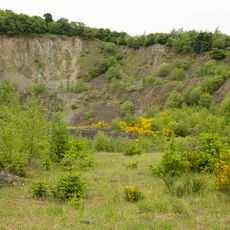
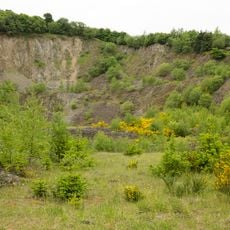
The Booser Doppelmaar consists of two circular depressions with tuff ridges in Germany's Eifel volcanic region, having accumulated sediment over thousands of years to create their present form. The formations display typical volcanic bowl shapes with distinct geological layers visible along their sides.
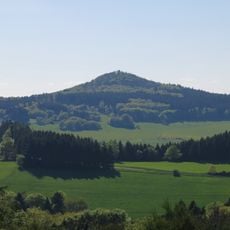
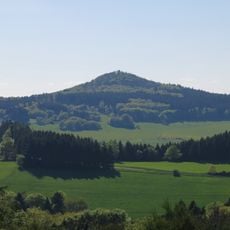
The eastern maar has been dated by C14 analysis of rocks and organic material to 14,160 years before present. Tuffs dated to 10,150 years ago cannot be positively assigned to either maar. Eight cinder cones in the immediate vicinity formed more or less simultaneously about 35,000 years ago.
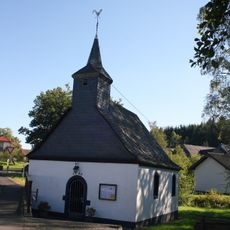
The name Booser Doppelmaar simply means "Double Maar of Boos", after the village whose territory holds both basins. The wet hollows once served as fish ponds, later silting up into meadows and arable fields; today the southwestern maar again holds a pond, the Booser Weiher. Tuff pits around the rims recall the quarrying of volcanic tuff from the eruptions.
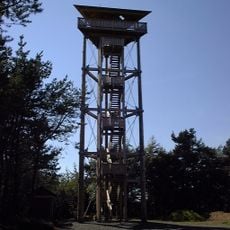
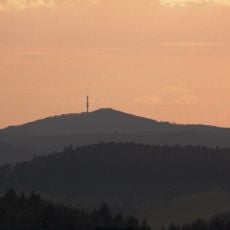
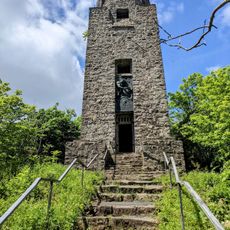
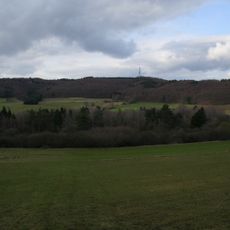
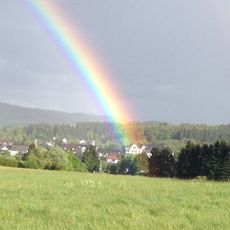
The two silted maars lie a few hundred metres west of Boos, in the Booser Maar nature reserve, one of the largest in Rhineland-Palatinate at around 152 to 157 hectares. The Booser Eifelturm stands on the Schneeberg, on the embankment at the eastern side of the east-northeastern maar. The site is a station of the Volcano Park in the Mayen-Koblenz district. The hollows are very wet, with spots permanently under water.
One of the nearby cinder cones produced a lava stream roughly 35,000 years ago that flowed westward into the Nitz valley, leaving traces visible today. This flow traveled many kilometers away, demonstrating the intensity of those ancient eruptions.
The community of curious travelers
AroundUs brings together thousands of curated places, local tips, and hidden gems, enriched daily by 93,146 contributors worldwide.