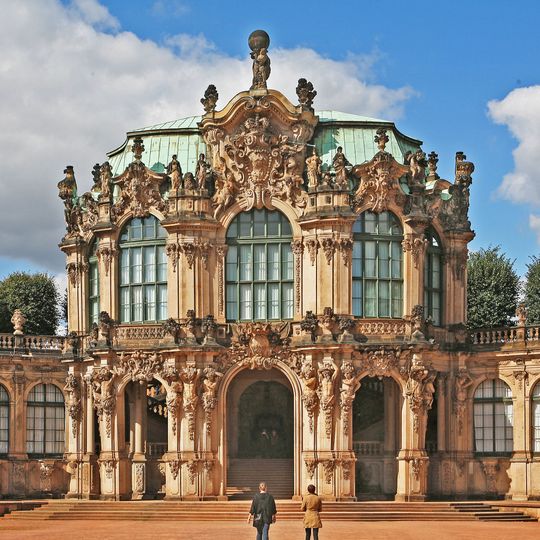
Wallpavillon, Baroque pavilion in Zwinger complex, Dresden, Germany
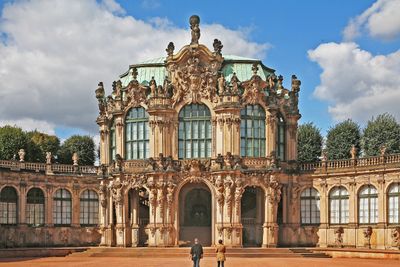
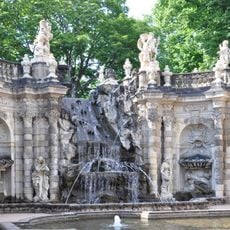
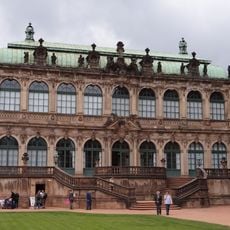
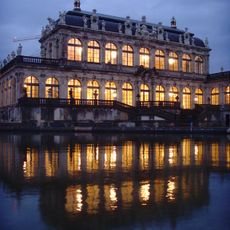
The Wallpavillon is a Baroque structure in the Zwinger complex with a semicircular design topped by a crown-shaped dome adorned with sculptures, stucco work, and figurative reliefs depicting Greek mythology. The decorative elements frame the courtyard with ornamental detail throughout.
Construction took place between 1710 and 1728 under the rule of Augustus II of Saxony, directed by architect Matthäus Daniel Pöppelmann and sculptor Balthasar Permoser. The pavilion was part of an ambitious effort to reshape the entire complex.
The pavilion contains a dome ceiling painted with mythological scenes and holds an extensive Meissen porcelain collection from the Saxon royal household. These works show how much the court valued fine craftsmanship and precious materials.
The grounds are accessible daily from 6 AM to midnight, with free courtyard access while some exhibitions require separate tickets. Stairs connect different levels, so visitors should be prepared for varying heights.
The structure combines stairs connecting the Zwinger courtyard to an adjacent wall with an elevated hall featuring two layers of sculptural ornamentation. This dual function as both a passage and display space gives it its distinctive character.
The community of curious travelers
AroundUs brings together thousands of curated places, local tips, and hidden gems, enriched daily by 91,375 contributors worldwide.