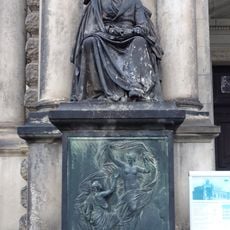
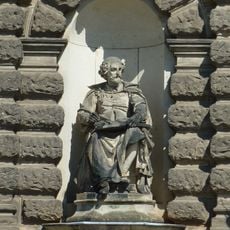
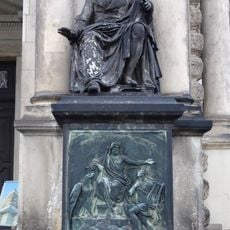
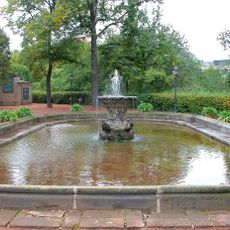
Nymphenbad, Baroque fountain structures in the Zwinger in Dresden
Nymphenbad is a small enclosed courtyard with a Baroque fountain in Dresden, decorated with statues of nymphs and tritons arranged in careful recesses. Water flows downhill in stages through jets built into the sculptures, creating an intricately designed scene that showcases the craftsmanship of the period.
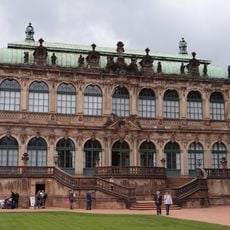
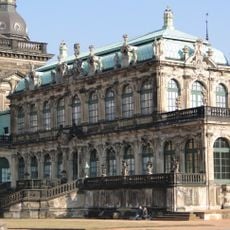
The Nymphenbad was built between 1709 and 1728 as part of the Zwinger complex under Elector Frederick Augustus I, with designs by Matthäus Daniel Pöppelmann and sculpture by Balthasar Permoser. It was conceived as a grotto-like basin within the festival grounds, not in the 17th century. Heavily damaged in 1945, the Zwinger was rebuilt by 1963, and the Nymphenbad was restored as part of that work.
The name Nymphenbad refers to the mythological water nymphs depicted in the sculptures throughout the courtyard. These figures showcase the Baroque period's fascination with classical themes and demonstrate how artists of that era drew inspiration from ancient legends.
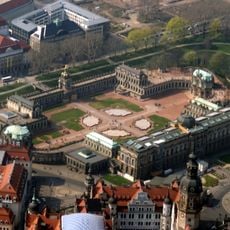
The Nymphenbad lies in the north-west corner of the Zwinger, reached through the Wallpavillon; from the Ostra-Allee side the entrance is at ground level. The fountain basin sits below the surrounding walkway, so the nymphs and tritons are best seen from the steps above. The paved courtyard has no benches and little shade.
Nymphenbad is a hidden corner within the Zwinger that many visitors overlook, only discovering it after entering the Wallpavillon stairwell. This tucked-away location makes finding it feel like uncovering a secret spot, giving the fountain a sense of discovery despite its closeness to other famous palace areas.
The community of curious travelers
AroundUs brings together thousands of curated places, local tips, and hidden gems, enriched daily by 94,036 contributors worldwide.