Mathematisch-Physikalischer Salon, Museum in the Zwinger, Dresden, Germany
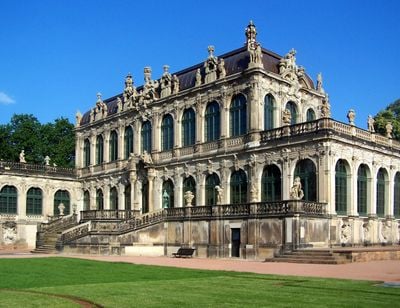
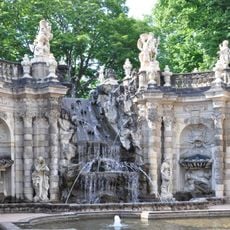
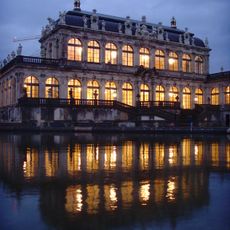
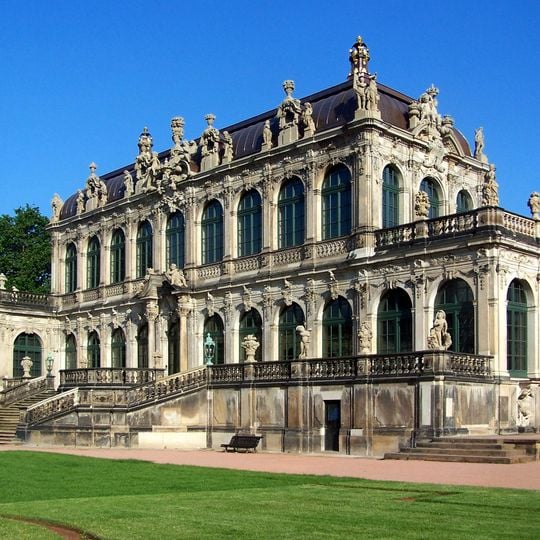
The Mathematisch-Physikalischer Salon occupies part of the Zwinger in Dresden, a stone building with arched windows, a balustraded staircase and carved figures along the roofline. Inside, four sections present about 500 of its 3,000 objects: mechanical marvels and mathematical instruments around 1600, terrestrial and celestial globes from seven centuries, telescopes and burning mirrors, and clocks and automata from the Renaissance onward.
The collection was separated from the armory in 1724, though individual pieces had been gathered since the 16th century under Elector Augustus of Saxony. It was housed in the Zwinger from 1728 and called the Royal Cabinet of Mathematical and Physical Instruments until 1746, when it took its present name. An observatory was founded there in 1784, and in 1828 Wilhelm Gotthelf Lohrmann helped establish the Technical Educational Institute, now TU Dresden.
The collection reflects how people once sought to measure and understand the natural world through carefully made instruments. These objects reveal the deep human desire to capture knowledge about mathematics and physics in tangible forms.
The museum is easy to reach from the main Zwinger entrance and occupies a smaller building within the complex. You can view the collection at a comfortable pace in roughly one to two hours depending on your interests.
The museum holds the only Pascaline, Blaise Pascal's calculating machine from around 1650, in a public collection outside France. It also keeps burning mirrors by Andreas Gärtner and lenses by Ehrenfried Walther von Tschirnhaus, and the planetary clock by Ebert Baldewein.
The community of curious travelers
AroundUs brings together thousands of curated places, local tips, and hidden gems, enriched daily by 92,859 contributors worldwide.