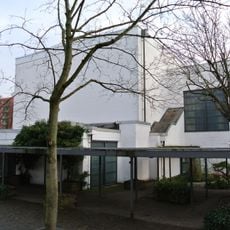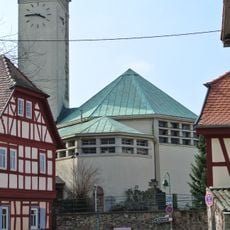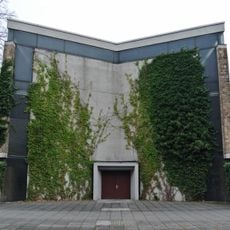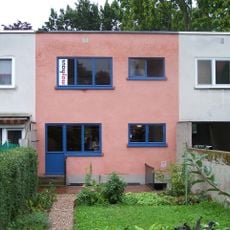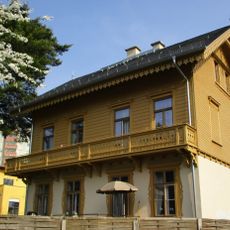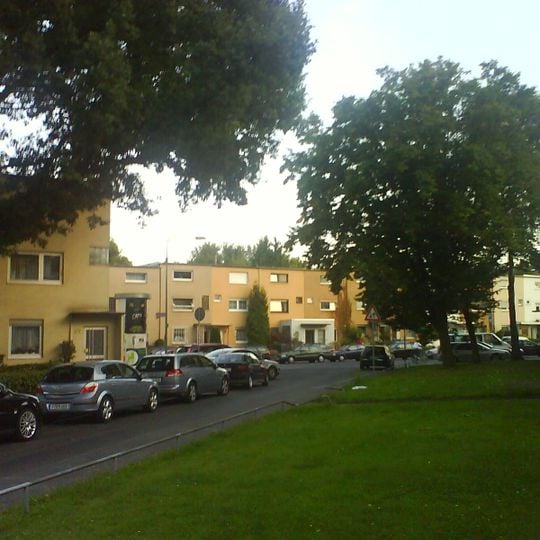
Siedlung Praunheim, Housing settlement in Mitte-West Frankfurt, Germany.
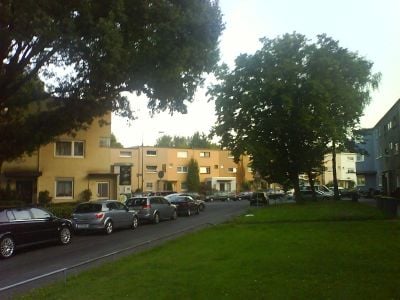
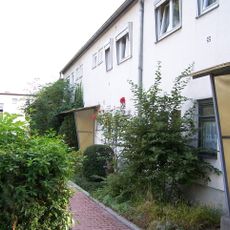
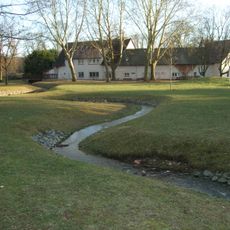
Siedlung Praunheim is a housing estate in Frankfurt's Mitte-West district, made up of different building types with varying floor plans arranged across a connected area. The estate includes blocks of flats and smaller terraced houses, each group built with its own staircase and heating layout.
The estate was designed between 1926 and 1929 by Ernst May and Eugen Kaufmann to address the severe housing shortage that followed World War I. It was part of a city-wide building program known as the New Frankfurt, which aimed to provide modern and affordable housing for a growing population.
Siedlung Praunheim is widely regarded as a clear example of the New Building movement, which favored simple forms and practical living spaces. Walking through the streets today, visitors can see the flat roofs, plain facades, and small gardens that give the area its open and ordered character.
The estate is well served by tram lines that connect it to the rest of Frankfurt, making it easy to reach without a car. Walking is the best way to explore the area, as the streets and paths are laid out on a human scale that rewards a slow pace.
The estate was fitted with a central radio distribution system that connected every apartment to the same signal, used for broadcasting programs and, later, air raid warnings during World War II. Systems like this were unusual in residential areas at the time and showed how far the planners pushed the idea of a fully equipped modern home.
The community of curious travelers
AroundUs brings together thousands of curated places, local tips, and hidden gems, enriched daily by 92,494 contributors worldwide.