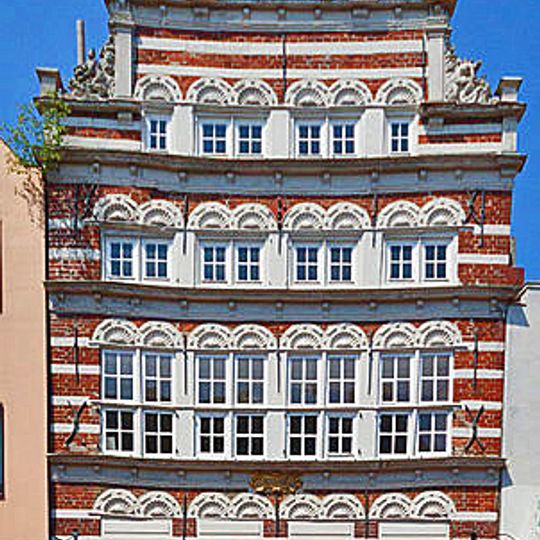
Schöningh House, Renaissance building in Norden, Germany.
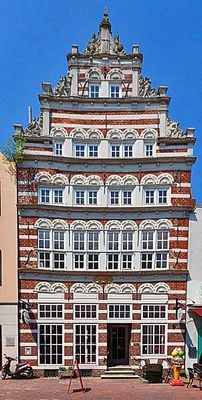
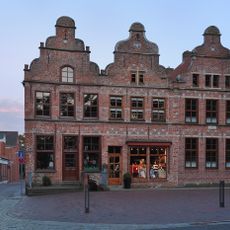
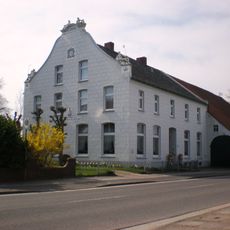
The Schöningh House is a three-story residential building in Norden featuring an alternating pattern of red brick and light limestone across its front facade. Its most distinctive features include cross-mullioned windows topped with shell-shaped sandstone crowns and an elaborately carved stepped gable above.
Built in 1576 as a merchant's house for Egbert Crayers, the structure was renamed in 1869 when Wilhelm Peter Schöningh purchased it. Structural concerns emerged in the 1960s, prompting major restoration efforts to ensure its long-term preservation.
The sandstone decorations on the stepped gable show three of Hercules's labors, a choice that reflected Renaissance values in East Frisian merchant homes. Such mythological scenes were common ways for wealthy traders to display their learning and status.
The building sits at Osterstraße 5 in central Norden and is easy to reach on foot. The appearance of the facade changes throughout the day depending on light and weather, so visiting at different times can offer new perspectives.
The shell-shaped window crowns are a rare architectural detail reflecting Dutch craftsmanship traditions that had limited reach in this region. This feature makes the house a valuable example of how design influences crossed between the Netherlands and East Frisia.
The community of curious travelers
AroundUs brings together thousands of curated places, local tips, and hidden gems, enriched daily by 91,060 contributors worldwide.