Border crossing Schusterkate, International bridge at Aabenraa Municipality, Denmark
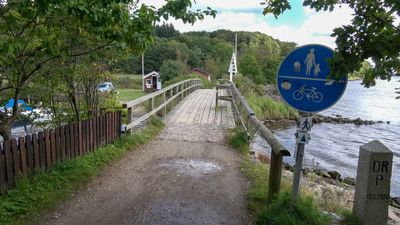
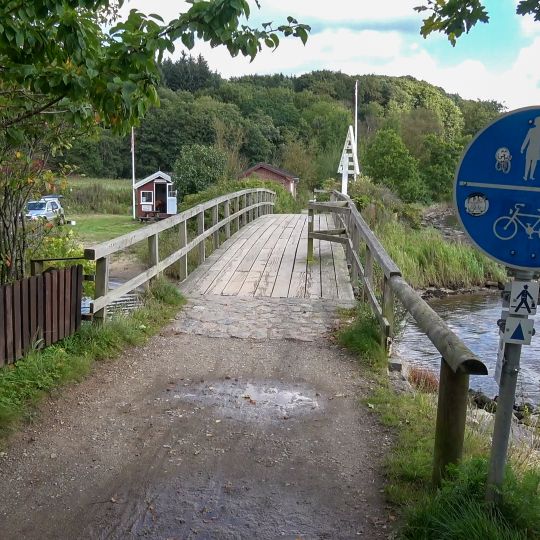
Schusterkate is a wooden footbridge measuring 25 meters long that crosses the Krusau River, connecting Denmark and Germany at their shared border near the Flensburg Firth. The structure features solid wooden supports and provides a direct walking route between the two countries for pedestrians.
The bridge was built in 1920 following the border treaty and marks the easternmost point of the newly established Danish-German frontier. It was constructed as part of the territorial reorganization that followed World War One.
The name Schusterkate refers to a former shoemaker's cottage that once stood beside the bridge, reflecting the local craft heritage of the area. This connection to everyday life shows how people marked and remembered their surroundings through the trades practiced here.
The bridge links the Danish Gendarmstien hiking trail with the German Fördesteig path, enabling cross-border walking experiences. The crossing is easily accessible on foot and offers a straightforward way to move between the two countries.
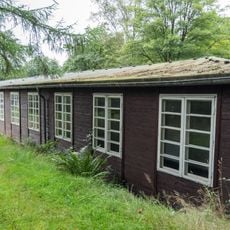
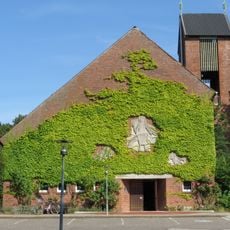
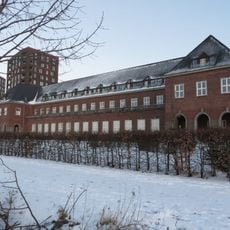
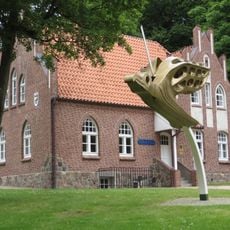
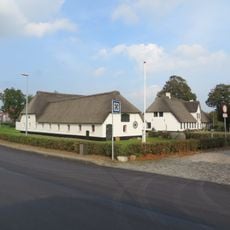
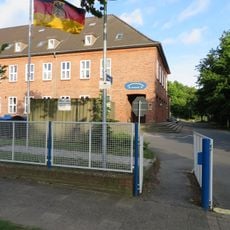
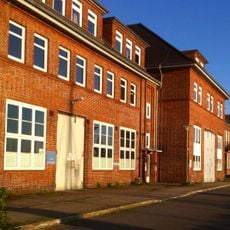
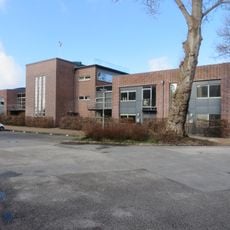
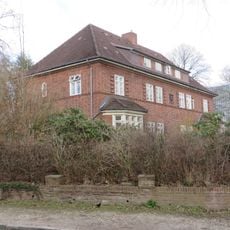
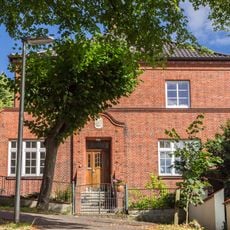
Two repurposed border control buildings flank the crossing and now serve as community spaces while keeping their historical character. These former official structures show how checkpoint buildings have been transformed into gathering places for local people.
The community of curious travelers
AroundUs brings together thousands of curated places, local tips, and hidden gems, enriched daily by 92,640 contributors worldwide.