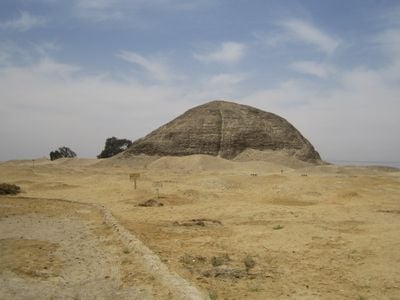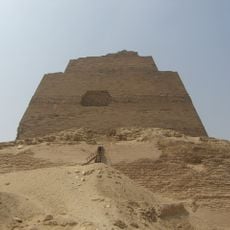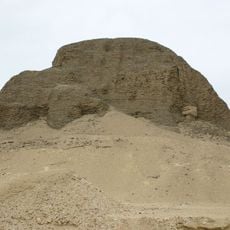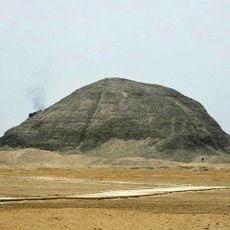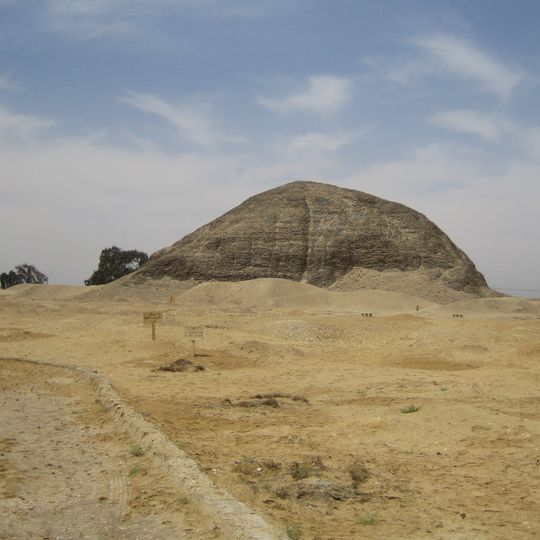
Hawara, Archaeological complex in Faiyum Governorate, Egypt.
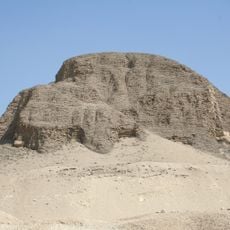
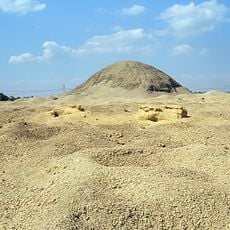
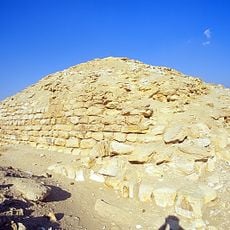
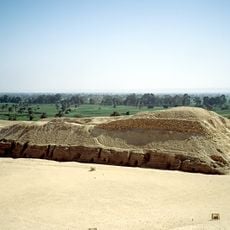
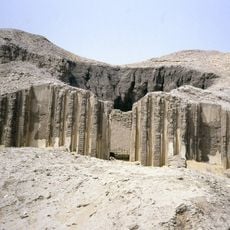
Hawara is an archaeological necropolis in Egypt built around a mud-brick pyramid with a base of 105 meters per side, containing passages that lead to a central burial chamber with a quartzite sarcophagus. The outer limestone casing that once covered it disappeared over time as people removed and reused the blocks.
Pharaoh Amenemhat III built this pyramid around 1850 BC during the Middle Kingdom as his tomb after abandoning an earlier construction project at Dahshur. Later, Greeks and Romans visited and used the site before it faded from attention for centuries.
The necropolis contained painted mummy portraits from Roman times and ancient manuscripts discovered by archaeologist William Flinders Petrie during excavations in the 1880s. These finds show how the site remained important to people across different periods of history.
Visit the site carefully because groundwater issues make interior access to the pyramid very difficult. It is better to explore the exterior and focus on the preserved structures around the pyramid rather than attempting to enter it.
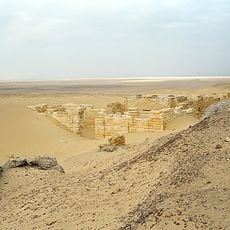
The adjacent temple complex was called 'The Labyrinth' by ancient Greeks because it had an intricate system of passages and rooms. This name shows how striking the architecture was to visitors at that time.
The community of curious travelers
AroundUs brings together thousands of curated places, local tips, and hidden gems, enriched daily by 91,363 contributors worldwide.