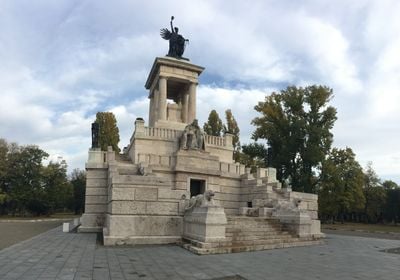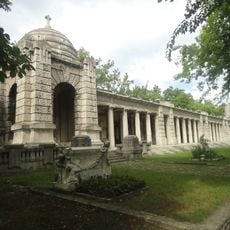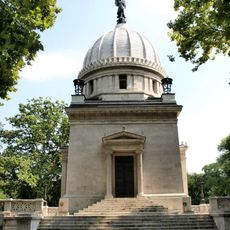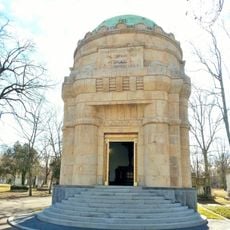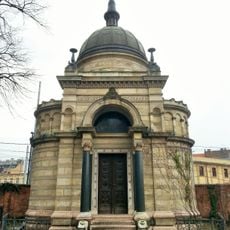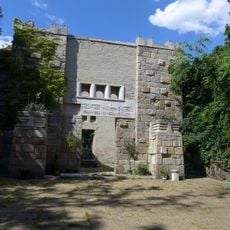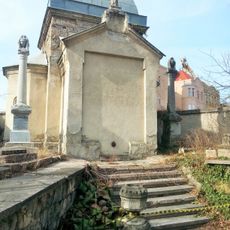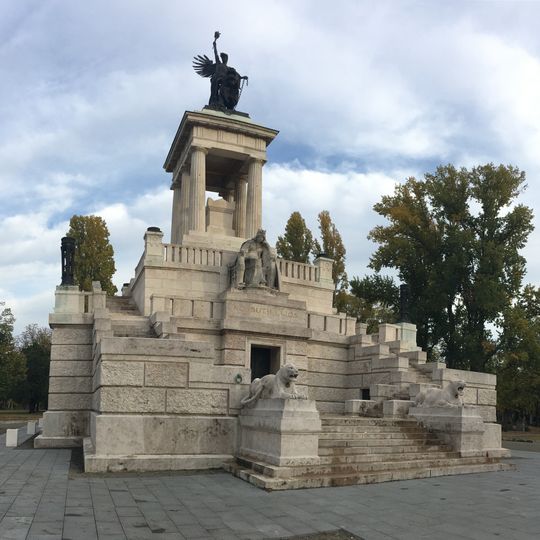
Kossuth-mauzoleum, Eclectic mausoleum in Fiumei Street Cemetery, Hungary.
Kossuth Mausoleum is an eclectic tomb located within Fiumei Street Cemetery in Budapest, featuring a green onyx sarcophagus, stone panthers guarding the entrance, and intricate Murano glass mosaics decorated with gold. The structure blends classical architectural forms with Hungarian ornamental details, creating a monumental presence in the cemetery grounds.
Built between 1902 and 1909 by architects Kálmán Gerster and Alajos Stróbl, this monument was created as the final resting place for Hungarian revolutionary leader Lajos Kossuth. The construction took place during a period when Hungary was establishing its national identity and erected monumental structures to express independence and patriotic values.
The statues inside the mausoleum depict Hungária enthroned and scenes from the revolution, showing what independence and national pride meant to Hungarian people. Visitors see these symbols of national struggle displayed throughout the monument.
The mausoleum sits within a large cemetery where you can walk freely among the graves and take time to explore the grounds. Access is available during daylight hours, but wear comfortable shoes since the cemetery paths require walking, and bring protection against weather.
This is the largest funeral structure in Hungary and incorporates architectural elements reminiscent of the Athens Parthenon, yet refined with distinctly Hungarian decorative features. This unusual blending of classical Greek forms with local artistic tradition makes it a notable example of early 20th century eclectic architecture.
The community of curious travelers
AroundUs brings together thousands of curated places, local tips, and hidden gems, enriched daily by 60,000 contributors worldwide.