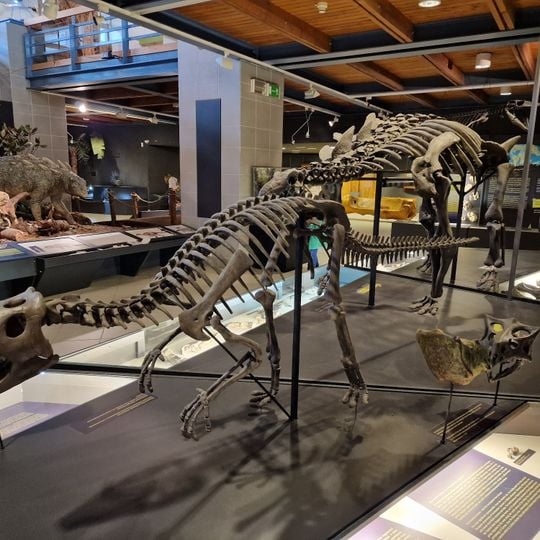
Hungarian Natural History Museum, Natural science museum in Budapest, Hungary
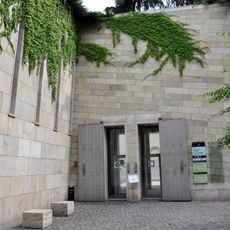
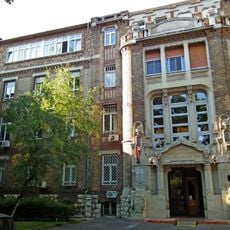
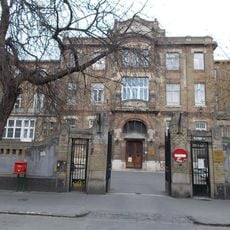
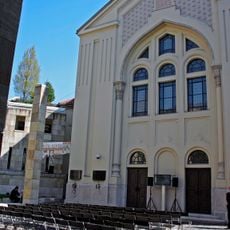
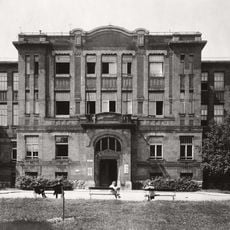
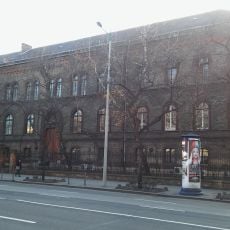
The Hungarian Natural History Museum is housed in the former riding hall of the Ludovika Academy on Ludovika Square in Budapest's District VIII, which it has used since 1995. Its departments of anthropology, mineralogy and petrology, geology and paleontology, and the library are based there, along with the bird and mammal collections of the zoology department. The building also holds the Molecular Genetics Lab and research groups of the Hungarian Academy of Sciences.
In 1802 Count Ferenc Széchényi gave his library and coin collection to the nation, and the mineral collection of his wife Julianna Festetics became the core of the natural history holdings. The first paleontological gift arrived from Archduke Rainer in 1811, and Pál Kitaibel's herbarium was bought in 1818. The collections gained partial independence in 1933 and moved into the former Ludovika Academy riding hall in 1995.
The museum's name in Hungarian is Magyar Természettudományi Múzeum, and its collections grew from the mineral cabinet of Countess Julianna Festetics, wife of founder Ferenc Széchényi. Its Department of Anthropology, set up after 1945 under János Nemeskéri, is among the ten largest in Europe. The museum publishes four periodicals, including Acta Zoologica Academiae Scientiarum Hungaricae.
The museum is easy to navigate with clear signage throughout and resting areas on each floor. Plan to spend two to three hours exploring the main collections without rushing.
The museum's building is the former riding hall of the Ludovika Academy, a military school, and the collections moved here in 1995; exhibitions opened in 1996. In 2015 the museum received a mummy identified as the Buddhist master Liuquan, found inside a Buddha statue dated to the eleventh or twelfth century, on loan from the Drents Museum in Amersfoort.
The community of curious travelers
AroundUs brings together thousands of curated places, local tips, and hidden gems, enriched daily by 92,654 contributors worldwide.