Parasnath, Sacred mountain peak in Giridih district, India
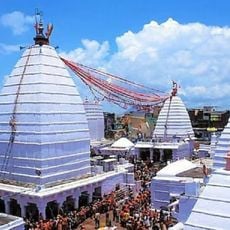
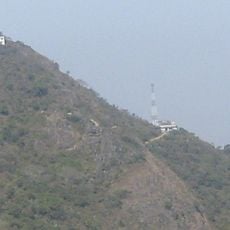
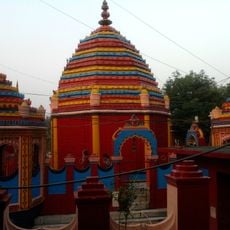
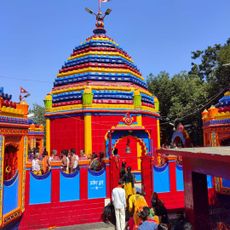
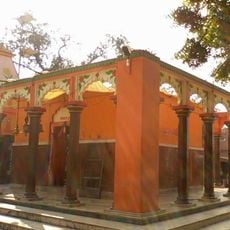
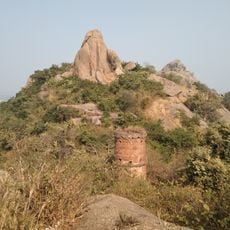
Parasnath is a 1,365 m peak at the eastern end of the Chota Nagpur Plateau in Giridih district, the highest in Jharkhand. Its rock is metamorphosed fine-grained sedimentary stone cut by granodiorite intrusions. On the summit stands the marble Svarna Bhadra Koot temple, with the Jal Mandir, also of marble, on the hill.
Parshvanatha, the 23rd Tirthankara, attained moksha here in 772 BCE after preaching for 70 years, and the hill is named after him. Jain texts call the site Mount Sammeta; the Jñātṛdhārmakātha, compiled in the 6th century BCE, is the earliest literary reference to Shikharji as a pilgrimage place. A 13th-century palm-leaf manuscript of the Kalpa Sūtra depicts his nirvana here.
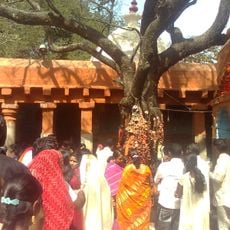
The hill is called Sammet Shikhar by Jains and Marang Buru by the local Santhal community, who revere it as a deity. On Moksha Saptami, marking Parshvanatha's liberation, pilgrims at the Parasnath tonk offer Nirvana Laddu, sugar balls, and recite the Nirvana Kanda. Santhal worshippers have traditionally carried tirthankaras to the summit, a practice that continues.
Parasnath is reached from Parasnath railway station, and the climb to the summit passes the marble temples of Shikharji. The upper slopes are walked by pilgrims, with Adivasi porters traditionally carrying them to the top, a practice that continues today. The hill lies at the eastern end of the Chota Nagpur Plateau in Giridih district.
Parasnath is theoretically inter-visible with Mount Everest, over 450 km (280 mi) away, by direct line of sight on a perfectly clear day. The claim rests on geometry, not on sightings: the Himalayan foothills lie about 180 miles north across the Ganges. The summit holds a small marble temple, Svarna Bhadra Koot, and a second marble temple, Jal Mandir, stands on the hill.
The community of curious travelers
AroundUs brings together thousands of curated places, local tips, and hidden gems, enriched daily by 94,641 contributors worldwide.