Col di Lana, Mountain in the Dolomites, Livinallongo del Col di Lana, Italy
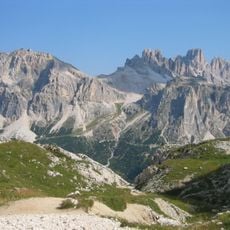
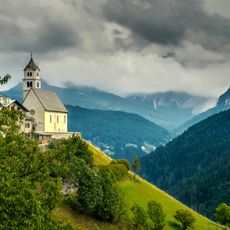
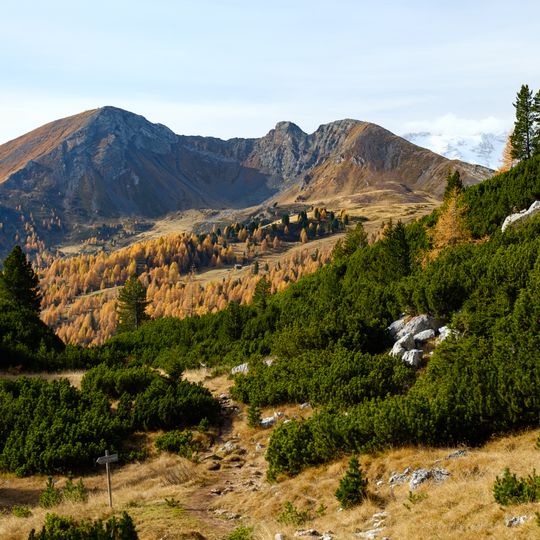
Col di Lana is a 2,462-metre mountain in the Fanes group of the Dolomites, above Livinallongo del Col di Lana in the province of Belluno. Its group runs from the Panettone (2,125 m) and Cappello di Napoleone (2,200 m) up to the main summit, then on to Cima Sief (2,424 m) and Col de la Roda (1,971 m). The upper slopes are bare grey and brown rock with scree and shallow gullies; the lower flanks are forested, golden on the sunlit face and dark green on the other.
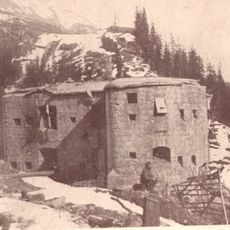
During World War I, Italian and Austro-Hungarian troops fought fiercely for control of this mountain. The fighting was so intense that the mountain earned the nickname 'Col di Sangue,' meaning Blood Mountain.
The mountain preserves military tunnels, trenches, and fortifications from World War I that visitors can observe while hiking. These structures tell the story of the intense fighting that took place across this landscape.
Several marked trails lead to the summit from different starting points such as Rifugio Valparola, Andraz Castle, and Pieve di Livinallongo. The routes are demanding and require proper equipment and physical fitness.
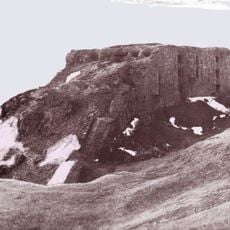
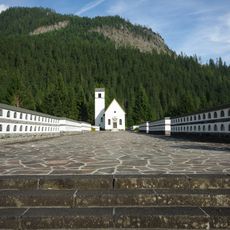
The mine detonated on 17 April 1916 at 23:35 left a crater 30 by 55 metres wide and 12 metres deep, killing about 150 Austro-Hungarian soldiers. Luis Trenker's film Montagne in fiamme recounts the episode. A chapel and the Brigata Alpina Cadore bivouac now stand on the summit.
The community of curious travelers
AroundUs brings together thousands of curated places, local tips, and hidden gems, enriched daily by 95,020 contributors worldwide.