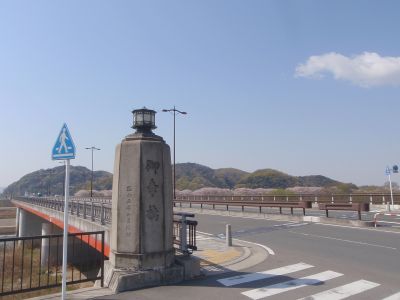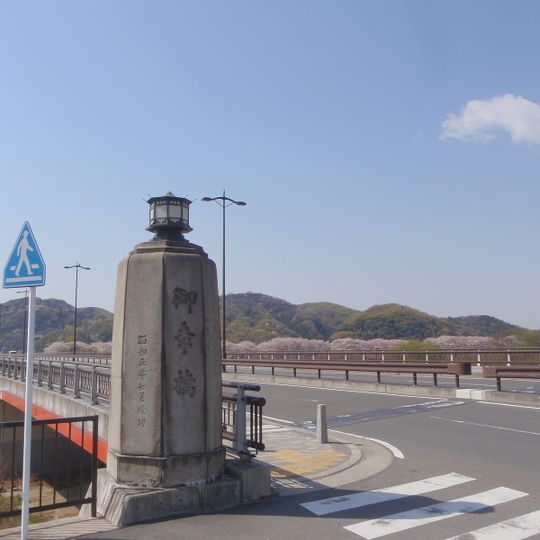
Gokō Bridge, Road bridge in Yawata, Japan.
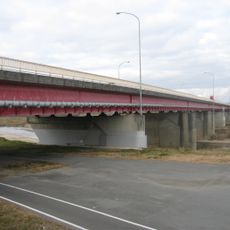
Gokō Bridge is a road bridge over the Kizu-gawa River in Yawata, Japan, linking the city of Yawata with the Kumiyama-cho district on the opposite bank. It is made up of eight wooden sections connected by metal cables, forming a crossing of about 356 meters in total.
The bridge was completed in 1953, replacing a ferry service that had carried people across the river for years. Its floating wooden sections were designed from the start as a way to deal with the Kizu-gawa's frequent flooding.
The bridge is known locally as Nagare-bashi, a nickname that describes what happens when the river rises and the wooden sections float on the surface. After the water goes down, the sections drift back into place, which people in the area still find remarkable to watch.
The bridge can be crossed on foot, which gives a close view of the wooden structure and the river below. During or just after heavy rain, the crossing may be temporarily unavailable, so it is worth checking conditions before heading out.
The bridge has been flooded many times since it opened, yet no permanent damage has ever been recorded because the wooden sections are meant to drift away and return rather than hold firm. This idea of giving way to the water instead of resisting it makes the design rare in modern bridge construction.
The community of curious travelers
AroundUs brings together thousands of curated places, local tips, and hidden gems, enriched daily by 60,000 contributors worldwide.