Harimayabashi Bridge, Road bridge in Harimayamachi, Kochi, Japan
Harimayabashi is a road bridge about 20 meters long in central Kochi, carrying National Route 32 and the Tosaden streetcar line. Its current granite railings date from a 1950 widening, and the red railings that once stood between road and sidewalk were moved in 1997 to the underground passage beneath the bridge.
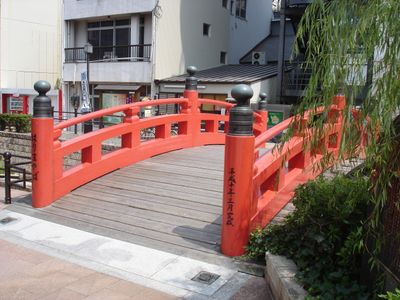
The bridge takes its name from the Edo-period merchants Harimaya and Hitsuya, whose main shops stood on opposite banks of the moat and who built a private crossing between them. A wooden bridge served until 1908, when it was replaced by a cast-iron structure with hairpin-shaped railings. That bridge was removed in 1929 for street widening and later moved to Sansuien; the present bridge was widened in 1950 and given stone railings.
The name comes from the Edo-period merchants Harimaya and Hitsuya, whose main shops stood on opposite banks of the moat and who built a private bridge between them. The Yosakoi song tells of the monk Junshin of Chikurin-ji, who bought a hair ornament for Oma, the daughter of a metal caster. A monument to Peggy Hayama's song "Nangoku Tosa o Ato ni Shite" stands in Harimayabashi Park and plays her voice every hour.
The site serves as a central transit point where streetcar and bus lines meet. The underground level provides shelter from rain and allows a dry crossing to the opposite side of the street.
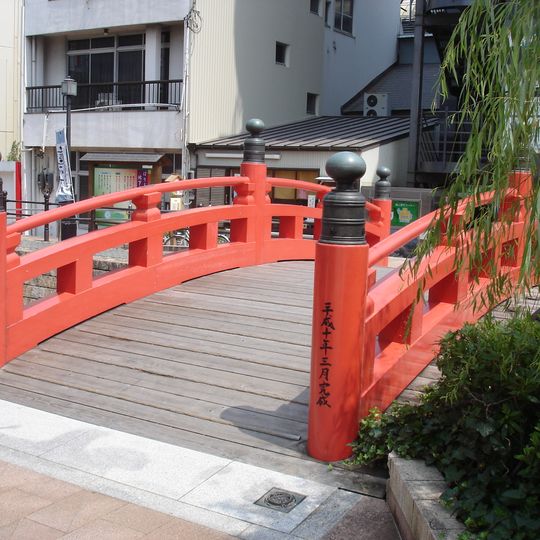
Four bridges called Harimayabashi exist around the park: the current road bridge, a vermilion 1998 replica of the Edo wooden bridge, a cast-iron bridge moved from Sansuien, and vermilion railings displayed in the underground passage. The 1908 cast-iron bridge had kanzashi-shaped railings.
The community of curious travelers
AroundUs brings together thousands of curated places, local tips, and hidden gems, enriched daily by 93,359 contributors worldwide.