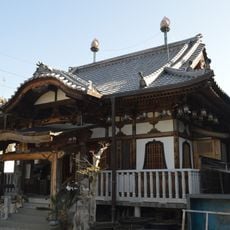
Asakura-jinja, Shinto shrine in Japan
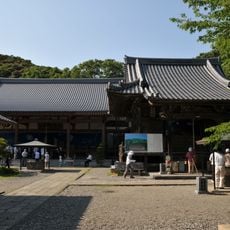
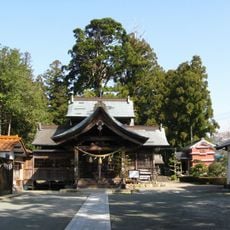
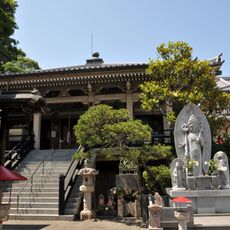
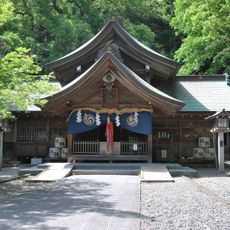
Asakura-jinja is a Shinto shrine in Kōchi whose main hall was rebuilt in 1657 by the second Tosa domain lord Yamauchi Tadayoshi. The honden has a gabled roof with a one-bay porch and curved gable, three ridge-end finials and five ridge posts, and is decorated with lacquer, gold leaf and polychrome painting. The later worship hall dates from 1796.
The shrine's founding date is unknown, but it is already listed in the Engishiki of 927 as a shikinai shrine of Tosa Province. In the Middle Ages it was called the second shrine (ninomiya) of Tosa, after Tosa Shrine. The main hall was rebuilt in 1657 by the second Tosa domain lord Yamauchi Tadayoshi, and the haiden in 1796 by the tenth lord Yamauchi Toyokazu.
The shrine is also called Kinomaru-sama, after the legend that a temporary palace of logs from Mount Akagi was built here for Empress Saimei. Its autumn festival on 10 November is a city-designated intangible folk cultural property, with the Nanmonden dance performed to the chant "Nanmonden" (Namu Amida Butsu) with fans, gongs and drums, alongside staff swinging and ritual sumo.
The shrine is open year-round and easily accessible by local transport or on foot from nearby neighborhoods. Visitors should rinse their hands and mouth at the purification basin before entering the sacred area as a sign of respect for the space.
The shrine keeps a pair of komainu lion-dog statues made of Owara ware, a pottery from the old Tosa province; only one other shrine in Kōchi, Shingū in Kagami, is known to have such a pair. The unsigned statues, 37 cm and 40.5 cm tall, are thought to date from the early to mid-Edo period.
The community of curious travelers
AroundUs brings together thousands of curated places, local tips, and hidden gems, enriched daily by 93,360 contributors worldwide.