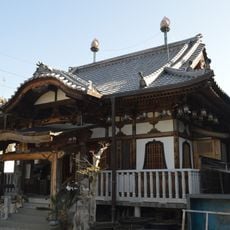
Omura Shrine, Shinto shrine in Japan
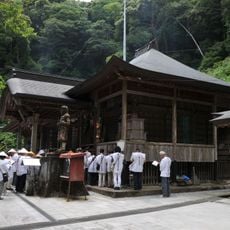
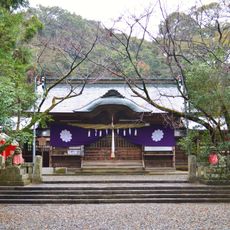
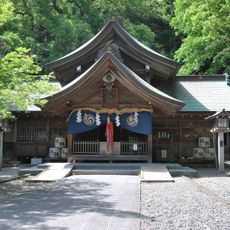
Omura Shrine (小村神社) in Hidaka, Kōchi Prefecture, has a main hall built in 1705, with a nagare-zukuri roof over the honden and a cross-shaped honden, heiden and haiden joined in the "detombo" layout, likened to a dragonfly. The shrine's shintai is a gilt-bronze ring-pommeled tachi, a straight sword of the late Kofun period. Behind the honden stands the Botansugi, a cedar measured at 25 m tall and 270 cm in trunk diameter.
According to shrine tradition the shrine was founded in 587, during the reign of Emperor Yōmei, though the date is unverified. In 870 the deity "Omura no Kami" was raised from junior fifth rank, lower grade, to junior fifth rank, upper grade, as recorded in the Nihon Sandai Jitsuroku. By the Nanboku-chō period it ranked as the second shrine of Tosa Province, after Tosa Shrine, and a 1347 ridge tag calls it "Shōichii Ninomiya Omura Daitenjin". The present sanctuary was built in 1705.
The shrine's festival, the Autumn Grand Festival on November 15, is when the National Treasure sword is shown. Beforehand, a chosen tōnin holds a rite at his house, from which a procession called "onabare" sets out, beating a large drum and carrying the portable shrine through the village. This head-house procession is a village-designated intangible folk cultural property.
Omura Shrine stands about 200 m north of Omura-Jinja-Mae Station on the JR Dosan Line, a station opened in 2008 and named after the shrine. The shrine is at 1794 Shimobun, Hidaka, Takaoka District, Kōchi Prefecture. The National Treasure sword is shown only on 15 November, the day of the autumn grand festival.
A special tree named Botansugi stands behind the main hall and is about 1000 years old, designated as a natural monument. Local people believe that the top of the tree sometimes glows like a small flame during times of trouble.
The community of curious travelers
AroundUs brings together thousands of curated places, local tips, and hidden gems, enriched daily by 93,547 contributors worldwide.