Kaichō-ji Temple, Buddhist temple in Uda, Japan.
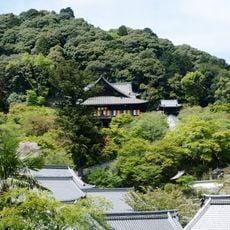
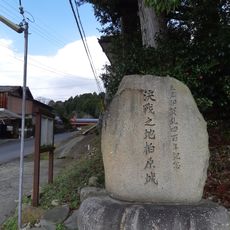
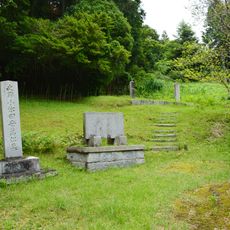
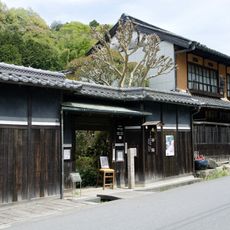
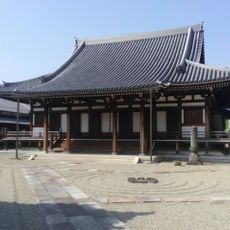
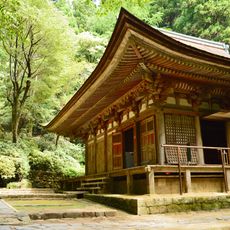
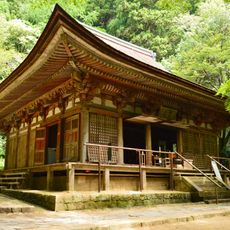
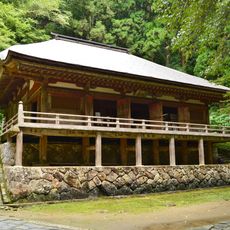
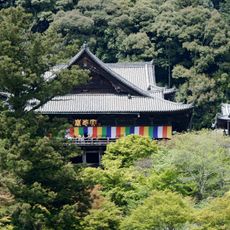
Kaichō-ji is a Shingon Buddhist temple on a terrace on the slope of Mount Kaiba in Uda, Nara Prefecture. Its main hall, built in 1864, and its bell tower gate stand beside a large ginkgo about 30 m tall and 4 m around. The temple grounds have no boundary with the adjoining Kaiba Shrine, and the approach is shared.
The temple's founding is undocumented; its first written mention is a 1240 entry in a Kasuga Shrine document calling it "Kaiba-ji." Temple tradition credits its founding to Prince Shōtoku under Emperor Yōmei and later maintenance by Kūkai, but no documents support this. Excavations in 1991 at the Kaiba site in the village below found 12th-century building remains, suggesting the old temple grounds covered much of today's settlement.
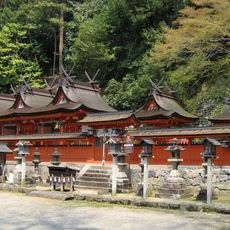
The temple's name is written 戒長寺, read Kaichō-ji, not 開帳寺. In the grounds, the main hall is flanked by the hall of worship and the main shrine of Kaishō Shrine, with no boundary between the two; the approach is shared, a trace of the era when Buddhist and Shinto practice were combined. The shrine's deity is Ōyamatsumi-no-Mikoto, honoured as the local tutelary god after the 1868 separation of the two faiths.
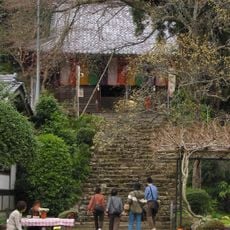
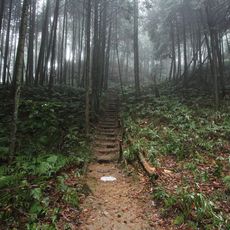
The temple stands on a slope of Mount Kaiba at 737.6 m, reached by a long stone staircase; a side path also exists. From Kintetsu Haibara Station take a Nara Kotsu bus to Tamadachi (7 min) and walk about 40 minutes, or to Tenmadai Higashi 2-chome (8 min) and walk about 30 minutes.
The temple's name is written with the characters for "precept" and "long," not with the characters for kaichō (開帳), so it has no link to the unveiling rite. Its bronze bell, cast in 1291 and a National Important Cultural Property since 1940, carries an inscription dated the thirteenth day of the third month of Shōō 4 and bears images of the Twelve Heavenly Generals, protectors of the temple's Yakushi Buddha.
The community of curious travelers
AroundUs brings together thousands of curated places, local tips, and hidden gems, enriched daily by 93,357 contributors worldwide.