Nikkō Tamozawa Imperial Villa Memorial Park, Historical park in Nikko, Japan
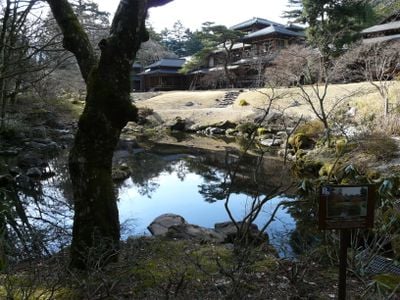
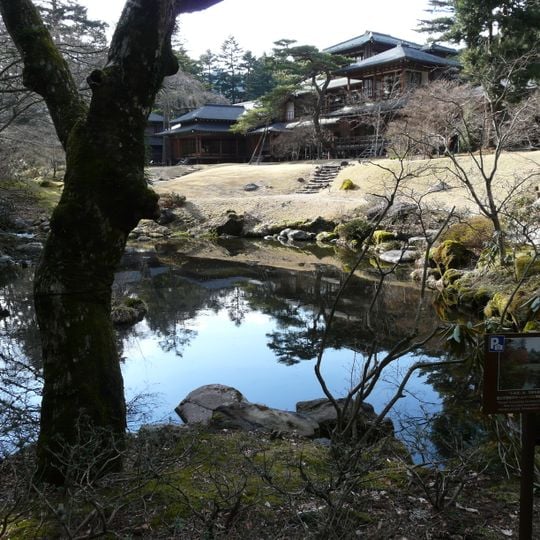
Nikkō Tamozawa Imperial Villa Memorial Park is a historical park in Nikko featuring a large wooden villa with multiple sections and floors built in traditional Japanese style. The complex displays craftsmanship and architectural design typical of imperial residences from its era.
The villa was constructed in 1899 as a residence for the Crown Prince and incorporated some existing local buildings along with structures moved from elsewhere. The complex evolved through various modifications and expansions over the following decades.
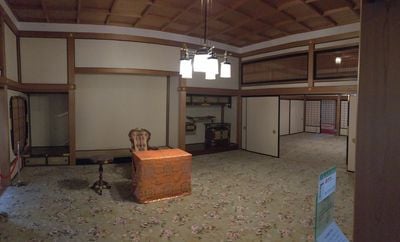
The Kishu Tokugawa clan's Edo residence, moved here from Akasaka in 1899, keeps its Edo-period rooms, where the emperor's study is called the Plum Room for the plum trees painted on its alcove walls. Meiji-era rooms came with it, and the 1918-1920 expansion added the audience halls. The emperor's bedroom alone used candlesticks instead of electric light.
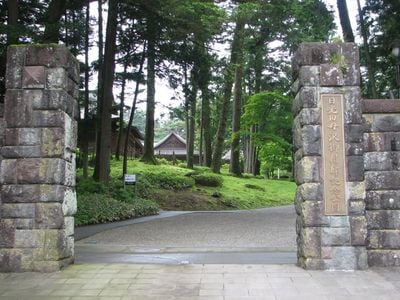
The villa stands at 8-27 Honchō, Nikkō, about 1 km upstream along the Daiya River from the Shinkyō bridge; a bus from Nikkō or Tōbu-Nikkō station stops at the site, and a paid prefectural car park faces it across the road. Most rooms are viewed from corridors or the adjoining antechambers, and visitors entering tatami rooms must avoid stepping on the silk-edged borders, which staff watch. The third-floor observation room and the empress's second-floor study open only during seasonal special viewings.
The 106-room villa is the only imperial villa from the Meiji era onward to survive almost entirely intact, which is why its ten buildings were designated Important Cultural Properties in 2003. The core came from the Kishu Tokugawa clan's Edo residence, built 1835–1840; it briefly served as a temporary imperial palace after the 1873 fire at the Nishinomaru Palace.
The community of curious travelers
AroundUs brings together thousands of curated places, local tips, and hidden gems, enriched daily by 94,043 contributors worldwide.