Hino Tanjō-in, Buddhist temple in Fushimi-ku, Japan
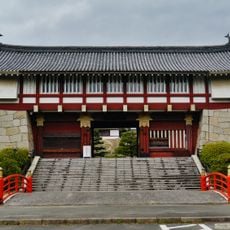
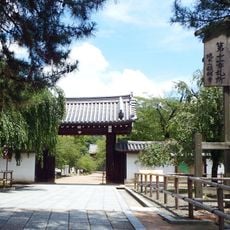
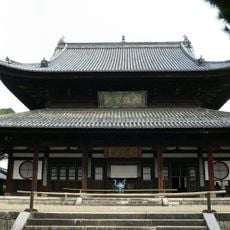
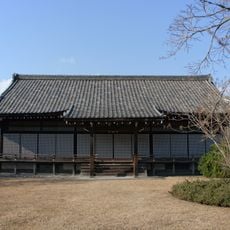
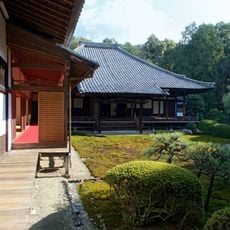
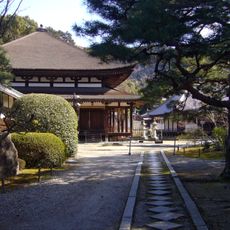
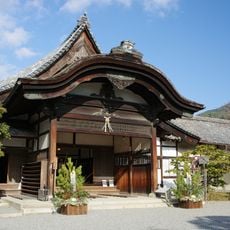
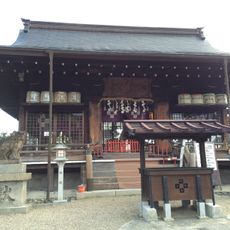
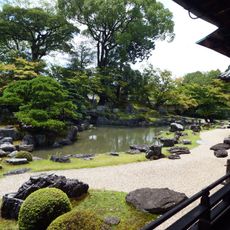
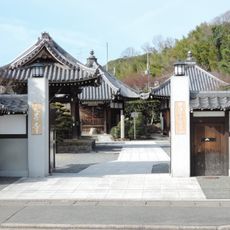
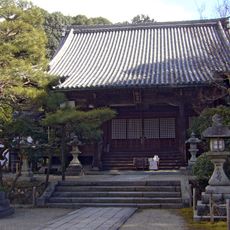
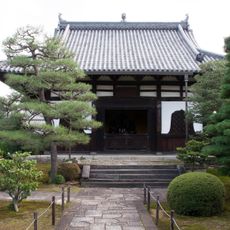
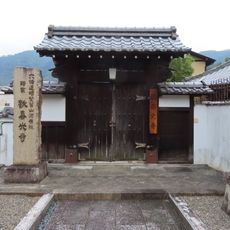
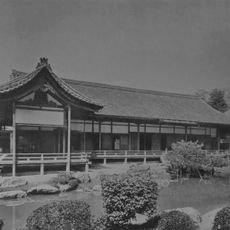
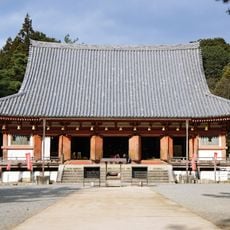
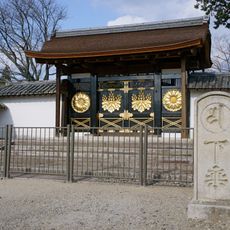
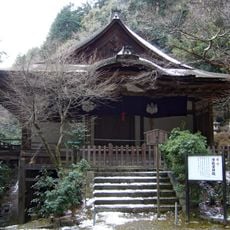
Hino Tanjō-in is a Buddhist temple in the Fushimi-ku district of Kyoto, set on a quiet hillside plot with several wooden halls and a landscaped inner garden. The main hall follows the style of Jōdo Shinshū temple architecture, with a wide veranda and a curved roof supported by wooden pillars.
The temple began in September 1828, when Nishi Honganji's 20th monshu Kōnyo built a hall called Yūhan-dō here to honour Shinran's birthplace. Renamed Hino Betsudō in 1878 by the 21st monshu Myōnyo, it was rebuilt from May 1928 under the 23rd monshu Shōnyo, completed in March 1931 and renamed Hino Tanjō-in that May.
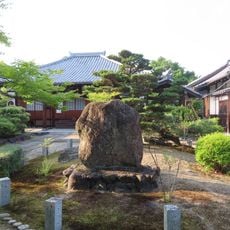
The temple takes its name from the Hino family, into which Shinran was born; his father was Hino Arinori, a descendant of Hino Sukenori, who founded Hōjō-ji in 1051. Near the main gate stand a bronze statue of Shinran at age six and a stone monument inscribed with a waka he is said to have composed at his ordination. Behind the nursery, in an outlying plot beside Hōjō-ji, are the Ubuyu no Ido well and the Ena-zuka mound.
The temple is located in the Hino area of Fushimi-ku, a short bus ride from the nearest train station, and the surrounding roads are narrow with limited parking. The grounds are on a slight slope, so sturdy footwear helps, and visitors should keep voices low as it remains an active place of worship.
The temple's grounds are separate from the main precinct: beyond the nursery school, beside Hōjō-ji, remain the "ubuyu no ido" well said to have provided Shinran's first bath and the "ena-zuka" mound where his afterbirth is said to be buried. The main compound also holds a bronze statue of Shinran at age six and a stone monument inscribed with a waka he composed at his ordination.
The community of curious travelers
AroundUs brings together thousands of curated places, local tips, and hidden gems, enriched daily by 93,357 contributors worldwide.