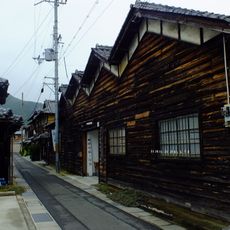
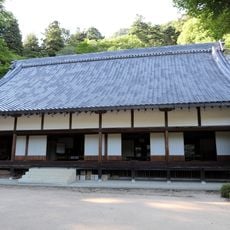
旧来住家住宅, Traditional wooden residence in Hyogo Prefecture, Japan.
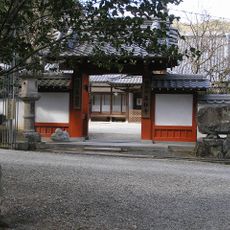
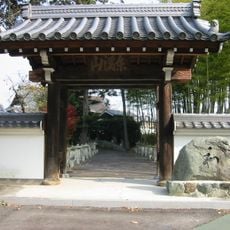
The former Kishi family residence in Nishiwaki, Hyogo Prefecture, is a 1918 wooden house with a 1936 Western-style annex. Its main building uses a central-corridor plan: a tatami-floored corridor separates family rooms to the north from guest rooms to the south, with the kitchen and bath at the east end. The grounds also hold a detached room, a guest bathhouse, storehouses and a garden designed by a Yabunouchi tea school master.
The residence was completed in 1918 as the home of banker Kishi Umekichi, founder of Nishiwaki Commercial Bank, on land held by a family of thread merchants and large landowners. Construction began in 1915 under his father's wishes, and the main house, detached wing and garden were finished three years later. The 1936 Western-style wing was added later. It was donated to Nishiwaki city in 2001 and registered as a national Tangible Cultural Property in 2002.
The house was built for the Kishike family, who traded in thread and owned about 10 hectares of fields and 80 hectares of mountain forest. Its rooms now host tea ceremonies, haiku gatherings, dance and patchwork; the detached annex and main rooms can be rented by the hour. The garden was designed by a master of the Yabunouchi tea school, using Kurama, Kamogawa and Ikoma Pass stones.
The house is about 1.5 km, roughly 20 minutes on foot, from JR Kakogawa Line Nishiwaki-shi Station, or about 10 minutes by Shinki bus to the Higashihonmachi stop, right by the house. It opens 10:00-18:00, until 17:00 from October to March, and closes Mondays (the next day if Monday is a holiday) and 29 December-3 January. Admission is free; the tatami rooms of the main house and the detached annex can be rented by the hour for tea gatherings, haiku meetings or dance practice.
The garden was laid out by a master of the藪内流 tea school, using Kurama, Kamogawa and Ikoma Pass stones, with a five-tier stone pagoda, lanterns and a pond. Between 1913 and 1915 the Nihonga painter Hashimoto Kansetsu stayed in the detached wing and produced many works there, and the household held exhibitions of his paintings. In 1928 Inukai Tsuyoshi stayed and left four Chinese-style poems, one later given to Nishiwaki city.
The community of curious travelers
AroundUs brings together thousands of curated places, local tips, and hidden gems, enriched daily by 93,851 contributors worldwide.