Hayasuihime-jinja, Shinto shrine in Oita
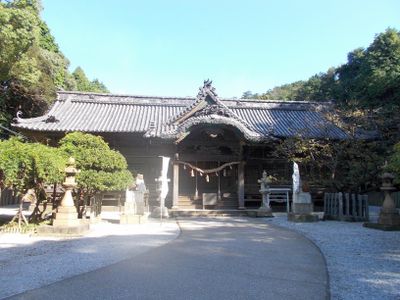
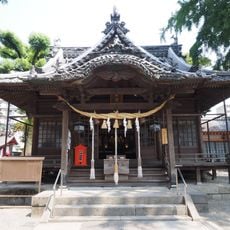
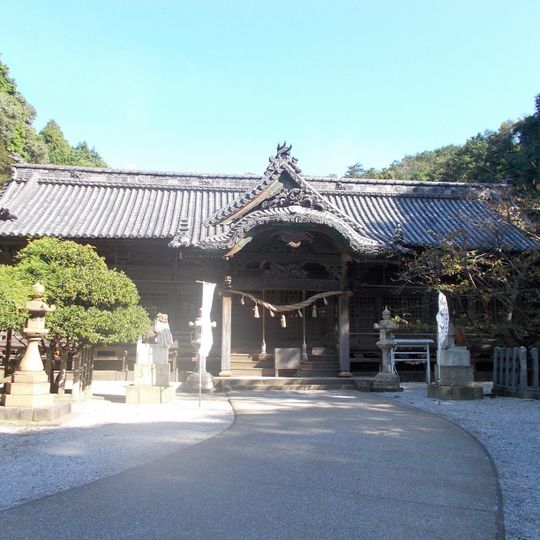
Hayasuihime-jinja is a single-story wooden shrine in Oita with a broad, dark grey tiled roof that extends over a projecting entrance porch. The gable above the porch carries carved wooden forms and a curved bargeboard, and a sacred rope hangs across the entrance opening. Two stone lanterns flank the approach, and two white paper streamers hang from vertical poles.
According to the shrine's origin story, in 667 BC the sea sisters Isago and Masago offered a divine sword guarded by an octopus to Kamuyamatoiwarehiko (later Emperor Jimmu) at the Hayasui Strait; he enshrined the sword and worshipped the deity Hayasuihime. In 701 the shrine was moved to its present site. The hall burned in 1600 and was rebuilt by Kato Kiyomasa in 1602; later Kumamoto lords of the Hosokawa clan maintained it.
The shrine is also known as Seki-no-Gongen. Worshippers submit pictures of an octopus inscribed with their wishes in the Tako-dachi Kigan, a prayer in which the octopus is asked to withdraw; the creature is the shrine's attendant, and its priests eat no octopus at all. Each May a wisteria festival is held, and in July the grand summer festival fills the streets with floats and a portable shrine.
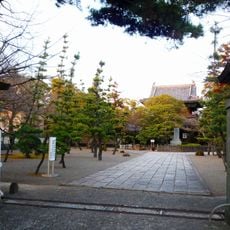
The shrine is located in Saganoseki, a quiet seaside area in Oita City, and features a free parking lot for visitors. Those arriving by train can take a taxi from the station for approximately 15 minutes to reach the site.
The octopus that guarded the sacred sword in the shrine's origin story is considered the shrine's servant, and its priests eat no octopus at all. Visitors still dedicate drawings of an octopus bearing their wishes in the "octopus abstinence prayer" (tako-dachi kigan).
The community of curious travelers
AroundUs brings together thousands of curated places, local tips, and hidden gems, enriched daily by 94,501 contributors worldwide.