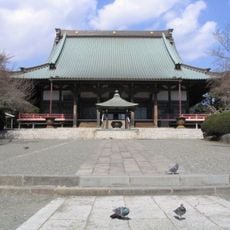
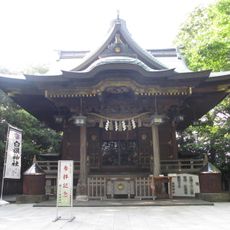
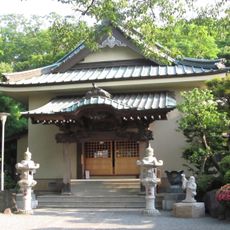
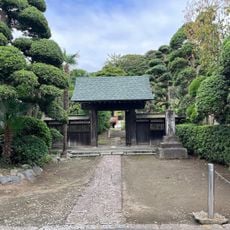
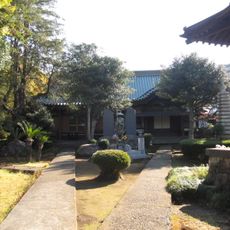
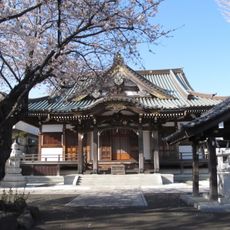
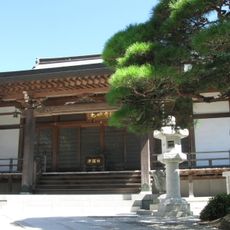
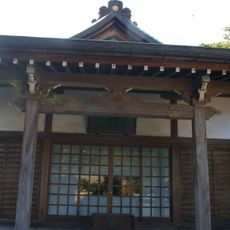
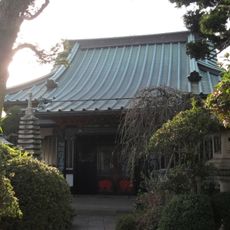
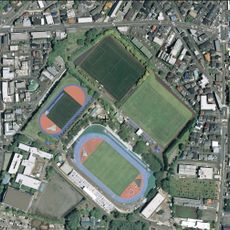
普門寺, Buddhist temple in Fujisawa, Japan.
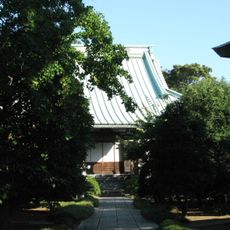
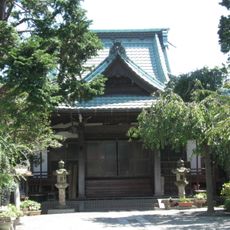
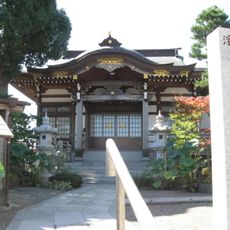
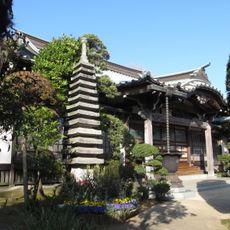
Fumon-ji is a Shingon temple in Fujisawa whose main hall, rebuilt in 1878, houses a wooden standing Fudo Myoo with two attendants, about 50 cm tall, on the central altar. The grounds also hold a two-part Dainichi Nyorai pair carved by the Goto sculptors of Kamakura-Ogigayatsu and a stone Kobo Daishi statue in the Daishi hall.
According to the temple's death register, in May 1528 the monk Ryogen (Ryogen Sozu), 35th abbot of Kanno-in, founded a temple at Tsuchidogahara in Hiratsuka with an Eleven-Faced Kannon as its main image. In March 1617 the monk Gencho Ajari re-established it on the present site and made Fudo Myoo the main image; the Kannon was moved to a hall east of the temple.
Fumon-ji holds the 47th and 88th (final) stations of the Sagami Province quasi-Shikoku pilgrimage, a circuit of 88 sacred sites laid out across Kamakura, Yokohama, Fujisawa, Chigasaki and Samukawa. The circuit was begun in 1817, when the monk Jōshin, at the request of Asaba Tarōuemon, gathered sand and seals from the Shikoku temples and buried them at the local sites. A stone pillar of 1827 in the temple grounds commemorates the circuit, and the Gion Tennō hall, built during an Edo-period epidemic, hosts the Gion Tennō festival on 14 July.
The temple is a 12-minute walk from Kugenuma Station on the Odakyu Enoshima Line, making it straightforward to reach. The grounds are generally open to visitors, and respectful dress is expected when exploring the site.
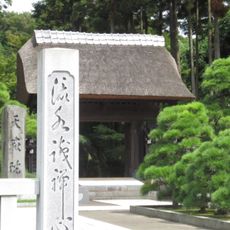
Just inside the temple gate stands a 3.3-metre stone pillar on four tiers of base stones, erected on 1 March 1827 by the Kōmyō Shingon confraternity. Its inscription, written by the elder Asaba, explains that the eighty-eight sacred sites of Shikoku were recreated here in the Kamakura area so pilgrims could complete the circuit without the long journey.
The community of curious travelers
AroundUs brings together thousands of curated places, local tips, and hidden gems, enriched daily by 94,227 contributors worldwide.