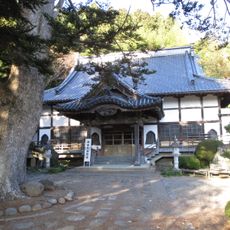
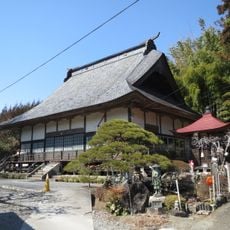
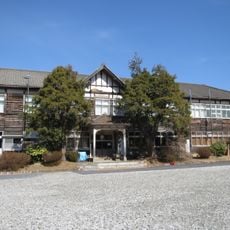
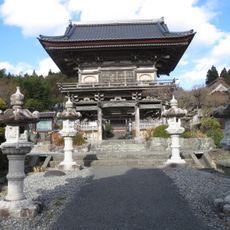
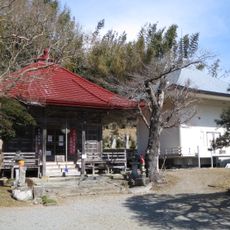
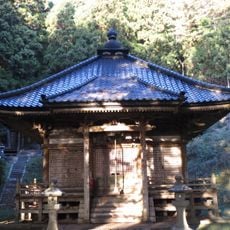
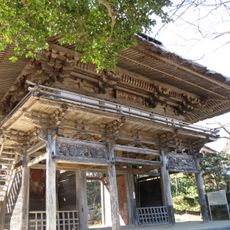
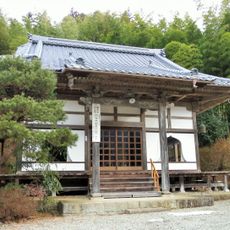
Fumonji, Buddhist temple in Rikuzentakata, Japan.
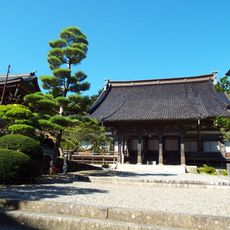
Fumonji is a Sōtō Zen temple in the Yonezaki district of Rikuzentakata, with the mountain name Kaiganzan and the Bodhisattva Shō Kannon as its main image. Its three-storey pagoda, built in 1809 and 12.5 m tall, is a prefectural cultural property, as are a wooden seated Kannon statue and a Muromachi-period Aizen Myōō painting. The main hall dates from 1877.
Tradition credits the temple's founding to 1241, when Abe Sadatoshi invited the Rinzai monk Kigai, a disciple of Eisai; another account names Jūsatsu in 1528. It later became a Sōtō Zen temple, and the main hall was rebuilt in 1877 after fires in 1591 and 1867.
On 19 May 2019, 18,430 "negai-zakura" cherry-blossom ornaments made from old kimono fabric were offered at Fumonji for the repose of disaster victims. Guinness World Records recognised the display as the world's largest hanging ornament collection. The temple is the 29th stop on the Ōshū Thirty-Three Kannon pilgrimage.
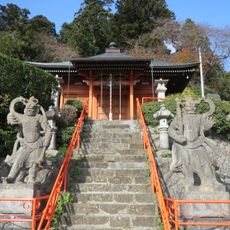
Fumonji stands in the Yonezaki district of Rikuzentakata, reached from the BRT Rikuzentakata station by the Iwate Kotsu bus bound for Matsumine via Hosoura or the Ichinoseki-Ofunato line, getting off at Matsumine and walking about 30 minutes. The three-storey pagoda and the temple hall stand on the grounds, and the hillside path is unpaved in places.
An ancient crepe-myrtle tree over 300 years old grows on the grounds, standing as a witness to centuries of local life and change. This tree silently connects past generations to those visiting today.
The community of curious travelers
AroundUs brings together thousands of curated places, local tips, and hidden gems, enriched daily by 93,665 contributors worldwide.