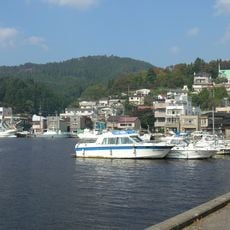
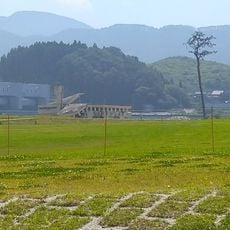
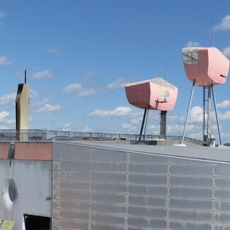
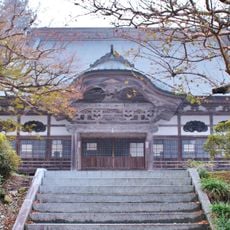
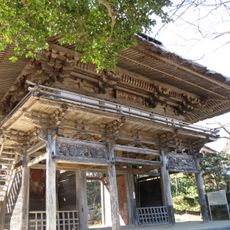
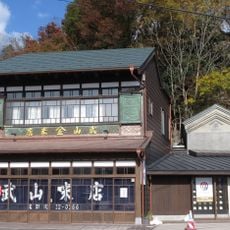
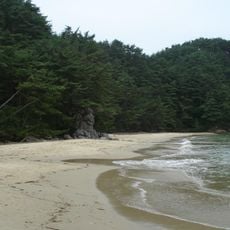
Goishi Coast, Natural monument coastal area in Ofunato, Japan.
Goishi Coast is a stretch of ria coastline on the southern Sanriku Coast in Ōfunato, Iwate Prefecture, made up of narrow, deep inlets and rock formations carved by erosion. Its beach consists of flat, rounded black pebbles of hardened mudstone that resemble Go game pieces. From Cape Goishi Lighthouse, about four kilometres of walking paths follow the cliffs past formations such as Anatoshi-iso, Kinchaku-iwa and Kaminari-iwa.
The Japanese government recognized the ecological importance of this coastline in 1937 by designating it as a national place of scenic beauty and a natural monument. This official protection ensured the preservation of the area and prevented major development along its shores.
The name comes from the flat black pebbles of black mudstone, rounded by the waves until they resemble Go stones. The coast also appears in Kōji Shinuma's 1975 debut hit "Omoide Misaki", which has a song monument here; the Goishi Kaigan-guchi BRT stop opened in 2013.
The site is most easily reached via the JR Tohoku Shinkansen to Ichinoseki Station, with connections on the Ofunato Line leading to Hosoura Station. From there, local buses connect to the coastal area where visitors can explore the shoreline on foot.
The wave sound at Kaminari-iwa ("Thunder Rock") was chosen by the Ministry of the Environment in 1996 as one of the 100 Soundscapes of Japan. The walking paths begin near the Cape Goishi lighthouse, and the Ōfunato City Museum stands beside it. A monument here bears the song "Omoide Misaki", the debut hit of singer Kenji Niinuma, who was born in Ōfunato.
The community of curious travelers
AroundUs brings together thousands of curated places, local tips, and hidden gems, enriched daily by 94,219 contributors worldwide.