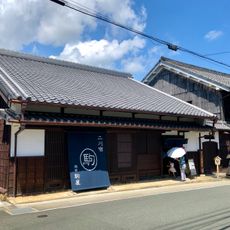
Honkō-ji, Buddhist temple in Kosai, Japan
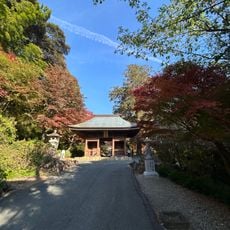
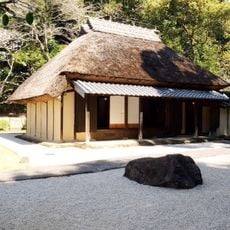
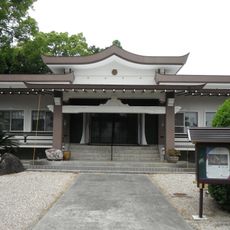
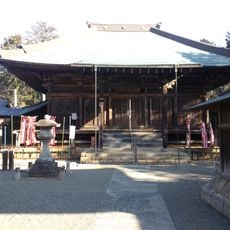
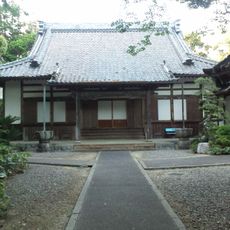
Honkō-ji is a Buddhist temple of the Hokke-shū Jinmon-ryū school in Kosai, Shizuoka Prefecture. Its main hall, built in 1552, has a hip-and-gable thatched roof and is a nationally designated Important Cultural Property. The grounds include a garden attributed to Kobori Enshū, a bell tower, and four subtemples: Chōshō-in, Kōmyō-in, Gyokuyō-in, and Tōkō-in.
In 1383 the Nichiren monk Nichijō won a debate against a monk of a Yakushi hall in Tōtōmi, who then became Nichijō's disciple under the name Nichijō (Daijiin Nichijō) and founded the temple, which became the head temple of the Jimon school in the Tōkai region. In the Edo period it held the rank of a 100,000-koku temple and was allowed to use the Tokugawa three-leaf hollyhock crest. The main hall dates from 1552.
Honkō-ji belongs to the Hokke-shū Jinmon-ryū school, whose head temple is Honjō-ji; its mountain name, Jōreizan, comes from the Lotus Sutra phrase "always dwelling on Mount Eagle." The temple keeps a stone monument inscribed with a poem by Kitahara Hakushū near the main hall: "I hear only the sound of water; of other things there is nothing to say."
Honkō-ji is a ten-minute walk west of JR Washizu Station on the Tōkaidō Main Line. The Kō-chan community bus also stops at "Honkō-ji-mae" on the Chibata-Izumi and Washizu loop (westbound) routes. Viewing the garden and the study buildings requires an admission fee.
The temple's main hall, built in 1552, is a thatched, hipped-roof structure designated an Important Cultural Property, and the temple holds four painted silk Lotus Sutra mandala scrolls. Near the main hall stands a stone monument inscribed with a poem by Kitahara Hakushū about hearing only the sound of water.
The community of curious travelers
AroundUs brings together thousands of curated places, local tips, and hidden gems, enriched daily by 93,364 contributors worldwide.