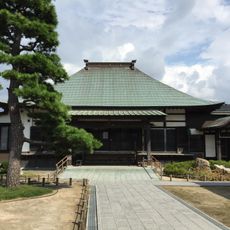
Kanzan-ji, Buddhist temple in Chūō-ku, Hamamatsu, Japan
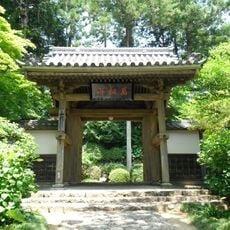
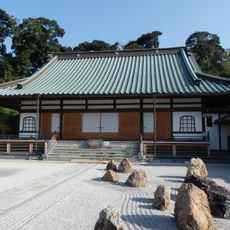
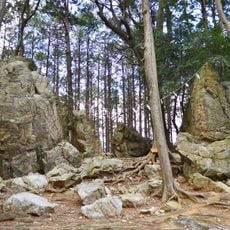
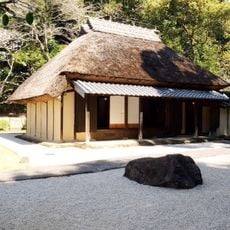
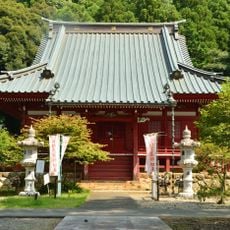
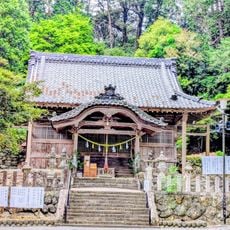
Kanzan-ji is a Sōtō Zen temple in Chūō-ku, Hamamatsu, at the foot of Mount Tateyama above Lake Hamana. Stone steps climb from the onsen street to the main hall, which shares its grounds with Atago Shrine. Behind the hall, walking paths lead past the Enmusubi Jizō, the large Kannon statue, and rocks named after Saigyō and a rooster's comb.
Founded in 810 by Kūkai as a Shingon temple, Kanzan-ji burned in 1187 and was rebuilt by Minamoto no Yoritomo; it burned again in 1384. From 1362 it served as the prayer temple of Horie Castle's lords. In 1598 Tokugawa Ieyasu granted it a vermilion-seal document. Abolished in 1870 under the separation of Shinto and Buddhism, it was revived in 1890 as a Sōtō temple.
The Enmusubi Jizo statue draws visitors who leave wooden prayer tablets asking for help with relationships and marriages. This practice reflects how the temple serves as a place where people seek blessings for their personal connections.
The temple is reached on foot with a steep staircase to enter, so visitors should allow time to explore the grounds and take in the views. Warmer months can feel intense, so arriving early or visiting during cooler times works better.
The December 15 fire ritual is tied to Akiba Sanjakubo Daigongen, the temple's guardian deity, and follows sutra chanting with a barefoot walk over embers; ordinary visitors may join the crossing. The temple also keeps a letter written to Ikkyū Sōjun by his mother.
The community of curious travelers
AroundUs brings together thousands of curated places, local tips, and hidden gems, enriched daily by 93,547 contributors worldwide.