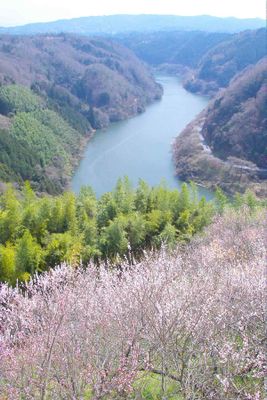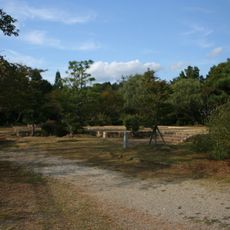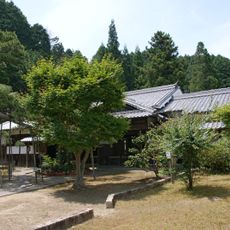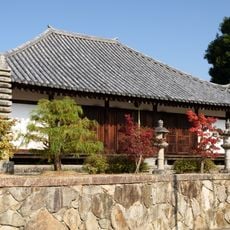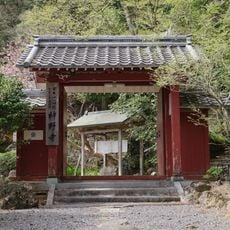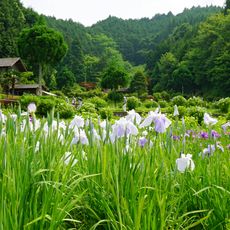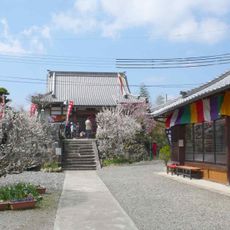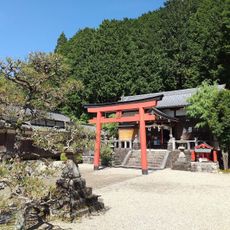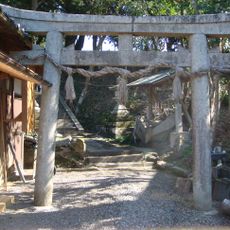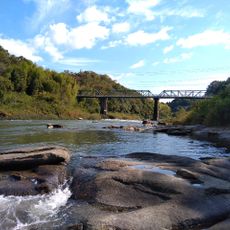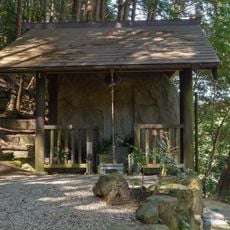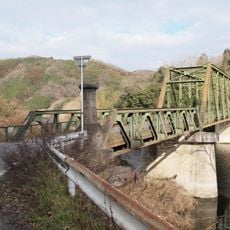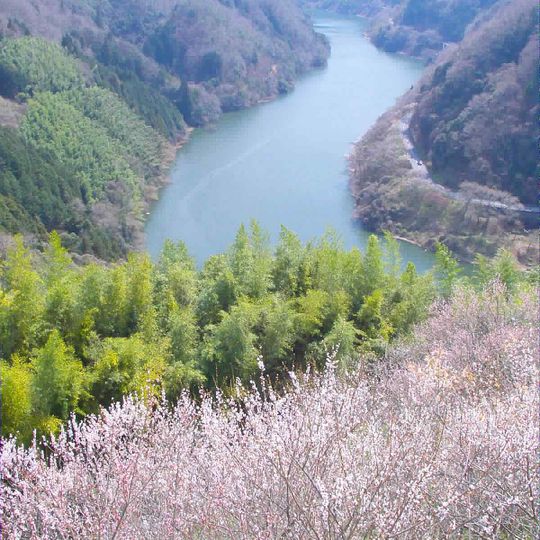
Tsukigase Plum Grove, Plum grove in Nara, Japan.
Tsukigase Plum Grove is a natural area dotted with thousands of red and white plum trees clustered on a mountainside near Tsukigase Dam. The trees grow closely together along the slopes, painting the hillside with different colors as they flower during the late winter and early spring months.
A temple legend dates the grove to 1205, when a plum favored by Sugawara no Michizane was planted at the founding of a Tenjin shrine at Shinpuku-ji. From the 15th century the slopes along the Satsuki River were planted for umeboshi, smoked unripe plums used in safflower dyeing, and by roughly 1810–1830 about 100,000 trees stood. The Takayama Dam, completed in 1969, submerged some 3,800 trees, which were replanted on higher ground.
The name Tsukigase is written in several ways, and the village was renamed from Tsukise to Tsukigase in 1968, while the 1922 national designation still reads "Tsukise Bairin". A stone pillar marks that designation, and a stele honours Sonohime, the court lady said to have brought the umeboshi-style smoked plum dye process here. The grove's plums were long grown for smoked unripe fruit used in safflower dyeing.
The grove lies on slopes between 200 and 300 metres, so the blossoms open about half a month later than in central Nara, usually reaching full bloom in mid-to-late March. Buses run from Nara and Ueno stations only a few times a day, with extra services during the blossom season. The site is split into several separate groves, including the Ura, Tenjin and Ryuo plum groves.
The grove's name survives in two forms: the scenic-designation name remains "Tsukigase Bairin" as written at the time of the 1922 designation, while the village renamed itself from "Tsukise" to "Tsukigase" in 1968. The stone pillar marking the national designation still carries the older spelling.
The community of curious travelers
AroundUs brings together thousands of curated places, local tips, and hidden gems, enriched daily by 95,303 contributors worldwide.