観菩提寺, Buddhist temple in Iga, Japan.
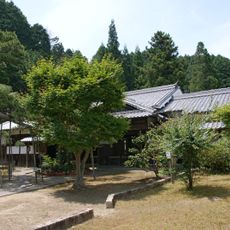
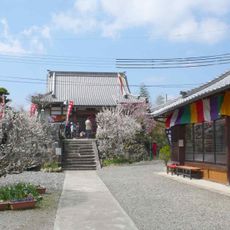
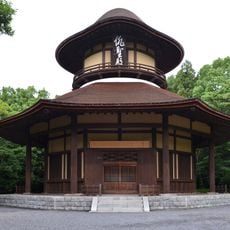
Kanbodai-ji is a temple in Iga featuring a main hall and a multi-story gate that show traditional architectural design from the Muromachi period. The wooden structures display the craftsmanship and style typical of Buddhist religious buildings from that era.
According to a mid-Edo-period temple chronicle, Kanbodai-ji was founded during the Tenpyo era (729–749) by Jicchu and revived in the Heian period; the exact founding date is unknown. In medieval times the temple had close ties with a warrior group known as the Shimagahara-to. Its main hall and tower gate are designated Important Cultural Properties.
The Shushoe rite, held on 11 and 12 February and called the festival that brings spring to Shimagahara, has a history of about 1,300 years. On the first day the toya, head of one of seven kō groups, walks from his home to the main hall carrying a daishō rice cake of 6 to 9 kg and an onigashira, a demon face made of palm fibre and mandarin oranges. In 2018 a woman served as toya for the first time.
The Shushoe rite on 11–12 February draws crowds to the main hall, so plan around those dates if you want a quiet visit. The temple stands in the Shimagahara district of Iga, and the main hall and romon gate are both designated Important Cultural Properties.
The principal statue is an eleven-faced Kannon figure with six arms that is displayed to the public only once every 33 years. This rare viewing cycle makes it a special attraction for those who happen to visit during an opening year.
The community of curious travelers
AroundUs brings together thousands of curated places, local tips, and hidden gems, enriched daily by 94,149 contributors worldwide.