Ohkurayama memorial hall, Cultural facility in a park in Kōhoku-ku, Yokohama, Japan
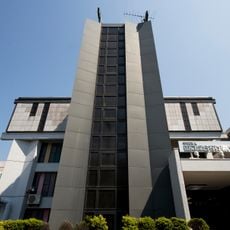
Ohkurayama Memorial Hall is a 1932 building in Ōkurayama Park, Kōhoku-ku, designed by Uheiji Nagano in the Cretan-Mycenaean (pre-Hellenic) style: a Greek temple-like exterior with Japanese-style wooden interior framing. Its central block carries a 25.5 m tower, and the entrance hall rises about 21 m to brownish stained glass and eagle-and-lion sculptures by Tenya Mizutani of the Tokyo School of Fine Arts.
The hall opened in 1932 as the main facility of the Okura Institute for Spiritual Culture before being transferred to Yokohama City in 1981. The transition marked a shift in its role from a private research center to a public cultural space.
The hall's name comes from founder Kunihiko Ōkura, whose ideas shaped each of its five sections: the hall represented self-awareness within the universe, the corridor served as a zazen hall, and the west wing housed research rooms. Today the hall seats 80 for concerts and lectures, the corridor is a gallery, and the west wing's former research rooms are meeting rooms 1 to 10. The site also hosts the Ōkurayama Documentary Film Festival.
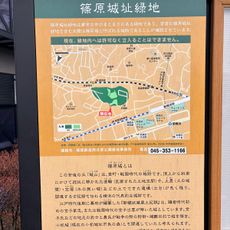
The hall stands inside Ōkurayama Park in Kōhoku-ku, a 7-minute walk from Ōkurayama Station on the Tōkyū Tōyoko Line. The former research rooms on the first and third floors are now meeting rooms 1 to 10, while the hall seats 80 and the former meditation corridor serves as a gallery.
Architect Uheiji Nagano designed the building with specific design elements that eventually led to its recognition as a municipal cultural property in 1991. This distinction highlighted the importance of his architectural approach.
The community of curious travelers
AroundUs brings together thousands of curated places, local tips, and hidden gems, enriched daily by 93,760 contributors worldwide.