Mito-jinja, Shinto shrine in Japan
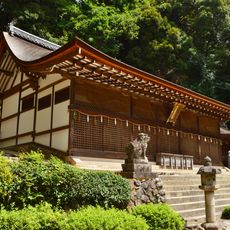
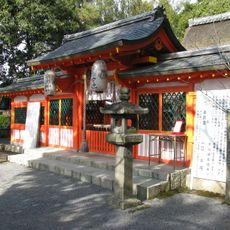
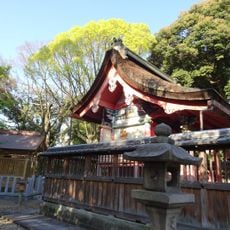
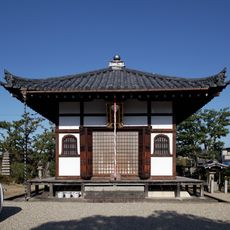
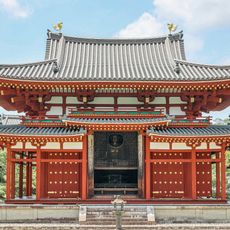
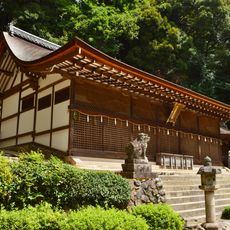
Mito-jinja is a Shinto shrine at the foot of Mount Konosu in Joyo, Kyoto Prefecture. Its main hall, built in 1448, is a one-bay nagare-zukuri structure with a cypress-bark roof and a large chidori gable. A carved frog-leg bracket under the front porch shows scrolling vines and bamboo grass. The shrine stands at the end of a roughly 600-meter approach lined with old pines.
According to shrine tradition, Mito-jinja was first founded in the early Heian period, though a surviving fragment of the Yamashiro no Kuni Fudoki mentions a "Mito no Yashiro" in Kuse district, suggesting it already existed in the Nara period. The Engishiki of the early Heian period lists "Mito-jinja, three seats." In 859 the deity was raised from Senior Sixth Rank to Junior Fifth Rank, and in 1907 the shrine was elevated to prefectural shrine status.
The shrine's name appears in the lost Yamashiro Fudoki as "Miwatari no sha," and by the Engi era it was recorded as Mito-jinja with three deities. The autumn festival runs from September 30 to October 2: on the 30th a children's portable shrine leads a fixed-order procession from Otabi, on October 1 a miko sprinkles hot water from an iron cauldron with bamboo during the Yudate rite, and on October 2 the deity is carried back. An ema painting of the Okage odori, danced here after the Edo-period Okage pilgrimage, is now performed by a local preservation society.
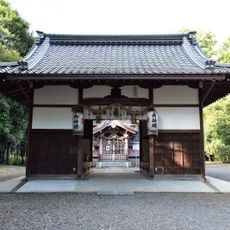
The approach runs about 600 m east from the second torii at the foot of Mount Konosu, on a gentle uphill slope; the first torii stands on the old Yamato road, roughly 200 m south of JR Joyo Station. The precinct is reached in about 1 km east of the station, north of Kyoto Prefectural Joyo High School, and the Joyo San-san bus stops at Joyo Koko-mae. The main hall, the city's oldest building, is a national Important Cultural Property.
The shrine keeps a Kyoto Prefecture Registered Cultural Property: an ema painting of the okage odori dance, donated on 1 November 1830 by residents of Terada Village's northeast quarter. It records a dance that followed the Edo-period okage mairi pilgrimages to Ise, and a local preservation society still performs it at the shrine.
The community of curious travelers
AroundUs brings together thousands of curated places, local tips, and hidden gems, enriched daily by 93,655 contributors worldwide.