Hayashi-jinja, Shinto shrine in Japan
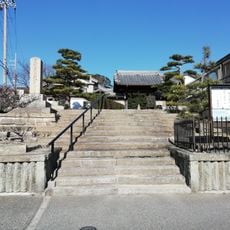
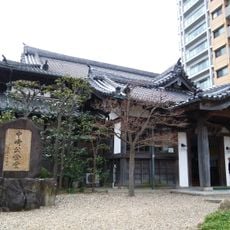
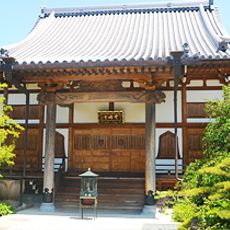
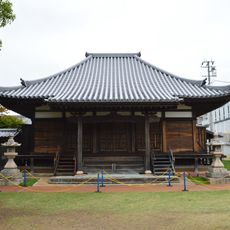
Hayashi-jinja is a Shinto shrine in the Miyanoue district of Akashi, Hyogo Prefecture, built in the nagare-zukuri style. Its honden stands on a raised platform beneath a roof that slopes asymmetrically forward on the front side. The shrine is also called Ueno-miya or Uenomiya Myojin, after the old name of its location, and is said to be the oldest shrine in Akashi.
According to shrine tradition, the deity Shōtomo-watatsumi-no-kami appeared on a huge red rock on the beach; when the rock sank beneath the waves in the 8th year of Emperor Seimu's reign, the shrine was founded the following year on higher ground overlooking the sea, making it Akashi's oldest shrine. It appears as "Hayashi-jinja" in the Engishiki register of 927. In 1005 four subsidiary deities were merged in, and in 1881 it was raised to prefectural shrine rank.
The shrine is also called Ueno-no-miya or Uenomiya Myojin, after the old Ueno district where it stands, and it is said to have given Akashi its name. Its autumn festival is known for a single large futon-daiko drum float. The kami enshrined here are Watatsumi-related sea deities, led by Wata-tsu-mi no mikoto.
The shrine stands in the Miyanoue district of Akashi, on ground once called Ueno, which gave the shrine its alternative names Ueno-miya and Ue-no-miya Myojin. The autumn festival is known for a single mikoshi-like futon-daiko drum float. Visitors should note the shrine's status as a former prefectural shrine (kensha).
The shrine is said to be the origin of the place name "Akashi": the deity Shōtoku-watatsumi no kami appeared on a huge red stone on the beach, and when that stone sank beneath the waves in the 8th year of Emperor Seimu's reign, the shrine was founded on higher ground the following year. Because the site was once called Ueno, it is also known as Ueno-miya or Uenomiya Myōjin.
The community of curious travelers
AroundUs brings together thousands of curated places, local tips, and hidden gems, enriched daily by 94,369 contributors worldwide.