Hikawa Nyotai Shrine, Shinto shrine in Japan
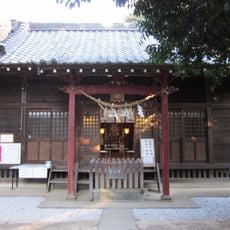
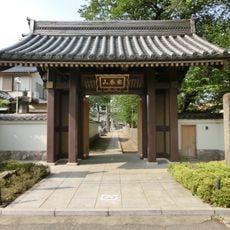
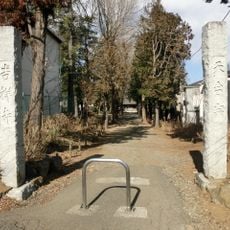
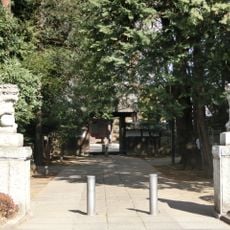
Hikawa Nyotai Shrine in Saitama's Midori Ward is the female counterpart to Omiya's Hikawa Shrine, which honors Susanoo. Its main deity is Kushinadahime, Susanoo's wife. The current main hall was rebuilt in 1667 under Tokugawa Iemitsu's orders, with a ridge tag naming it 'Musashi Province Ichinomiya Hikawa Nyotai Daimyojin'. Behind the hall stand several subsidiary shrines.
Shrine tradition holds it was founded in the reign of Emperor Sujin, when the deity was invited from Izumo Taisha. In 1591 Tokugawa Ieyasu granted the shrine 50 koku of land. Its Edo-period documents and the plaque on the worship hall call it Musashi Province's ichinomiya, and the main hall was rebuilt in 1667 under shogun Tokugawa Iemitsu's order, with Abé Tadaaki as magistrate.
The shrine is called Nyotai (female-body) because it pairs with Omiya's Hikawa Shrine, the male-body shrine, and enshrines Kushinadahime, wife of Susanoo. It also honours Mihotsuhime and Onamuchi. The grounds are locally known as Mimuro, so "Mimuro's Hikawa Shrine" means this one. A paper-charm ritual, the Nagoe-harae, is a city-designated folk custom.
The shrine is accessible on foot and can be visited for free from the outside. Visitors should wear respectful clothing and follow the customary rules of a Shinto shrine, such as how to approach sacred areas.
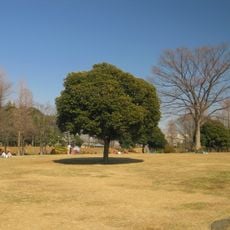
The shrine's former boat festival (Ofunamatsuri) was held on the now-drained Minuma marsh; after reclamation in 1728 it was replaced by the Iwanefune festival at a round island in a pond, held until the early Meiji era. The site survives as the Iwanefune Festival Ritual Site, a city-designated historic site since 1979.
The community of curious travelers
AroundUs brings together thousands of curated places, local tips, and hidden gems, enriched daily by 94,363 contributors worldwide.