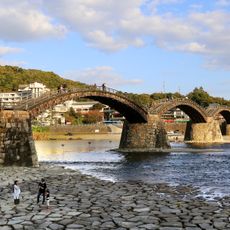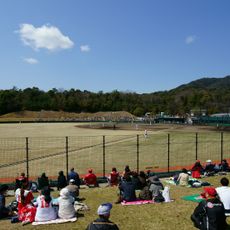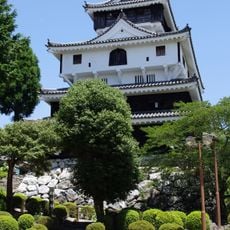
Yanai Chausuyama Kofun, Ancient burial mound in Yanai, Japan.
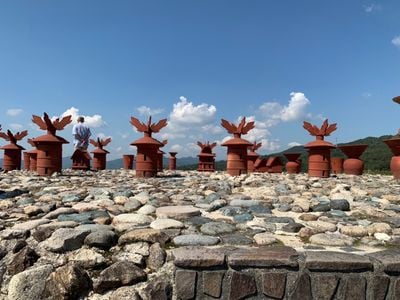
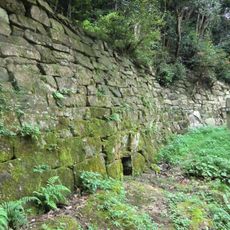
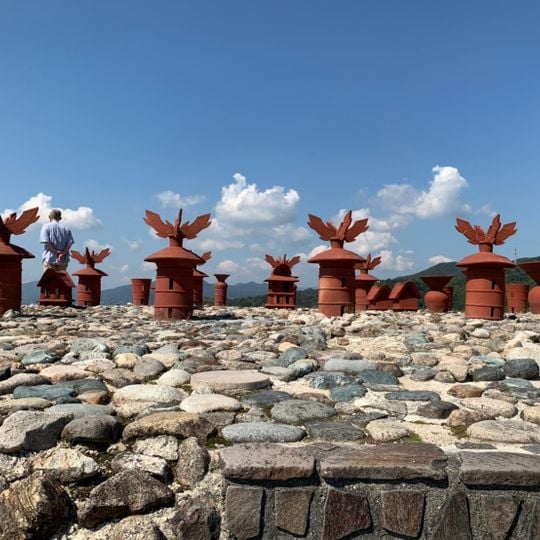
The Yanai Chausuyama Kofun is a keyhole-shaped mound about 90 metres long, with a three-tiered rear circle roughly 57 metres across and a two-tiered front section about 40 metres wide, pointing south-southwest toward Yanai Bay. Its slopes were faced with river and mountain stones, and rows of cylindrical haniwa once stood on the terraces. Two burial chambers lie on the rear summit: a stone-lined pit opened in 1892 and an unexcavated clay-lined grave.
Built around the end of the 4th century, the mound was excavated in 1892 after two local boys found the opening of its stone chamber. It was designated a National Historic Site on 14 January 1948. The burial goods, including five bronze mirrors, indicate close ties to the Yamato court.
The name Chausuyama, "mortar mountain", comes from the mound's shape. Rows of cylindrical, morning-glory, pedestal and house-shaped haniwa stood on the terraces and summit, about 140 cylinders by estimate, and fukiishi cobbles cover the slopes. The 1892 finds were made after two local boys found the opening of the stone chamber.
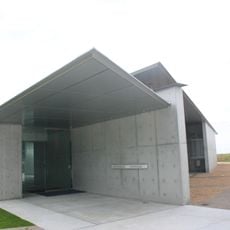
The site is easily accessible with informational displays explaining its structure and layout. An on-site museum provides detailed information about discoveries and burial practices of the ancient period.
Excavations at this site uncovered a large bronze mirror, one of the most remarkable discoveries from this era. This find reveals the craftsmanship and wealth of the people who built this mound.
The community of curious travelers
AroundUs brings together thousands of curated places, local tips, and hidden gems, enriched daily by 94,154 contributors worldwide.