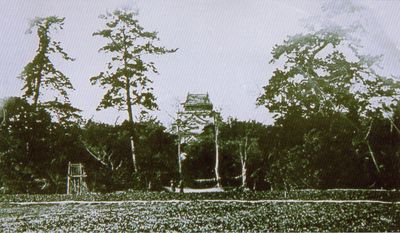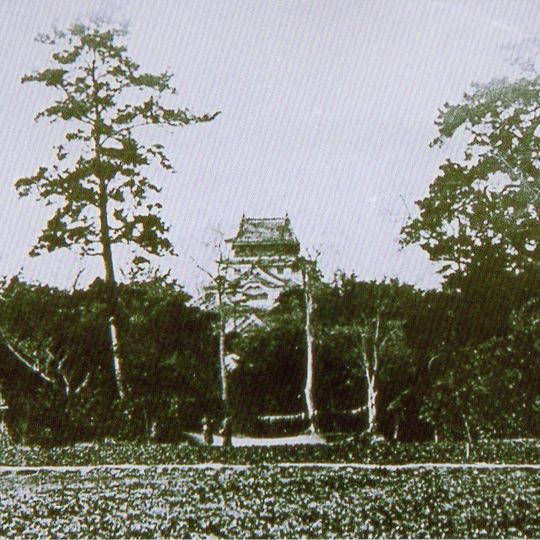
Yanagawa Castle, Japanese castle in Yanagawa, Japan.
Yanagawa Castle is a medieval fortress surrounded by water-filled moats that connect to rivers and canals, creating multiple layers of defense. The remaining stone walls are still visible and outline the central protected area of the original stronghold.
Kamachi Haruhisa built the castle as a branch of Kamachi Castle; Kamachi Akihisa or Kamachi Akimori later made it the clan's main stronghold, and Akimori carried out the full construction. After the Kamachi fell, the Ryūzōji, then Tachibana Muneshige, held it. In 1600 it passed to Tanaka Yoshimasa, who rebuilt it as a modern fortress; in 1622 it returned to the Tachibana, who ruled until 1868.
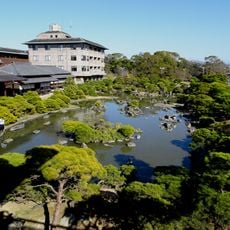
The name Maizuru-jō, "Dancing Crane Castle", came from the silhouette of the towers, likened to a crane in flight. The moats that once ringed the castle survive as the canals of Yanagawa, and rowed tourist boats now pass the old water gates. The Tachibana family's former villa, called Ohana, lies west of the site and is now part of a hotel complex with the Tachibana shikakan museum.
You can explore the site on foot or take boat tours through the moat system to see the layout and understand the defensive design. Wear sturdy shoes since some areas involve water and uneven ground from the natural landscape.
The moat system survives as the canals of present-day Yanagawa, and the castle's former site now holds Yanagawa High School and Yanagawa Junior High School. The tenshudai, the stone base of the tower, sits in a corner of the junior high school grounds and is nicknamed "Hesokuri-yama"; its slope is used for training by sports club members. A haiku monument to the Yanagawa-born poet Kitahara Hakushū, the first in the country, was erected there in 2010.
The community of curious travelers
AroundUs brings together thousands of curated places, local tips, and hidden gems, enriched daily by 93,561 contributors worldwide.