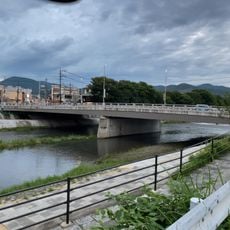
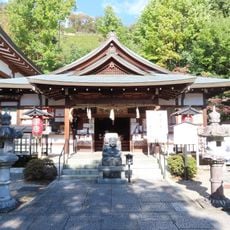
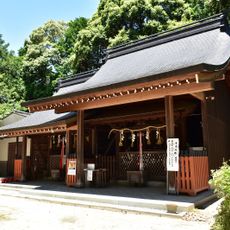
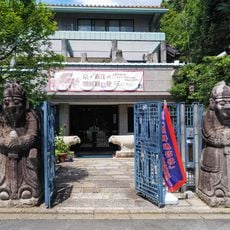
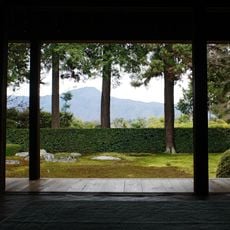
Midorogaike, Natural monument and artificial pond in Kamigamo, Kita-ku, Japan.
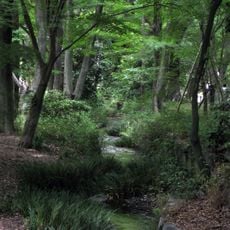
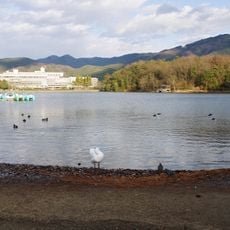
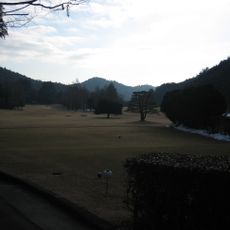
Midorogaike is a pond and wetland of about 9.2 hectares with a circumference of roughly 1,540 metres, lying in a low basin ringed on three sides by hills: Keshi-yama to the north, Takayama and the peninsula-like Chinko-yama to the east, and Nishiyama to the south. Only the southwest end opens onto the Kyoto Basin. A floating island occupies about a third of the water and rises in summer and sinks in winter.
The pond formed about 10,000 years ago when Kamo River deposits blocked a valley mouth; an artificial embankment was added around the 6th century for irrigation. Its first recorded name, "Deinōchi", appears in the Ruiju Kokushi compiled by Sugawara no Michizane, describing Emperor Junna hunting water birds there in 829. In 1927 the aquatic plant community was designated a national natural monument, extended in 1988 to the whole biological community.
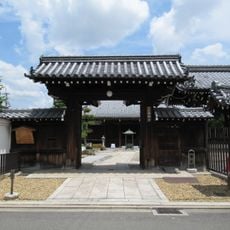
The name long used in Edo-period sources was Misono-ike (御菩薩池), linked to Jizō worship; after the 1868 separation of Buddhism and Shinto the Jizō image was moved to Jōzen-ji and the name Midorogaike took over. Izumi Shikibu wrote a waka on the pond's water birds, and the painter Ike no Taiga is said to have taken his surname from the pond.
The site is accessible on foot through marked pathways, with public transportation available nearby. Informational signs throughout the grounds help visitors understand what they are seeing and plan the best time to visit.
The pond's floating island, about a third of the water surface, rises in summer and sinks to be flooded in winter. In 1930 the water spider was found here for the first time in Japan, and around 60 of Japan's roughly 200 dragonfly species occur at the pond.
The community of curious travelers
AroundUs brings together thousands of curated places, local tips, and hidden gems, enriched daily by 94,417 contributors worldwide.