Kyoto Botanical Gardens, Botanical garden in Sakyō-ku, Kyoto, Japan
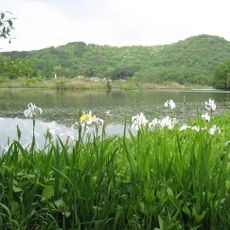
The Kyoto Botanical Gardens are a 24-hectare (59-acre) site in Sakyō-ku that displays approximately 12,000 plant species from Japan and around the globe. Plants grow in specialized greenhouses and outdoor areas, allowing visitors to explore diverse flora in one location.
The site was bought by Kyoto Prefecture in 1913 for a planned exhibition marking the Taishō Emperor's accession; when that fair went to Okazaki Park, a botanical garden was decided instead in 1915 with Mitsui family funding. Construction began in 1917 under designer Ryōsaku Terasaki, who kept the old Nakaragi woodland and its shrine in place. It opened on 10 November 1923 and began paid admission on 1 January 1924. From 1946 occupying forces seized it for 12 years, building 140 housing units and clearing most trees; it reopened on 24 April 1961.
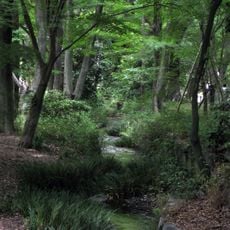
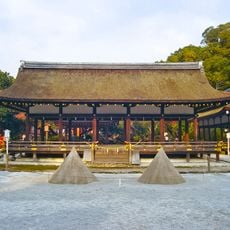
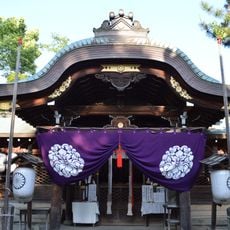
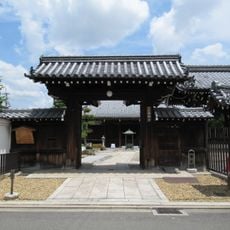
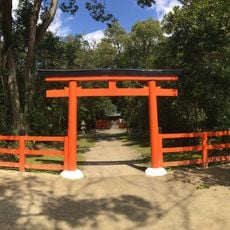
The garden's name Nakaragi-no-mori comes from Nakaragi Shrine at its centre, long venerated by Nishijin weavers as a deity of textiles; one explanation of "Nakaragi" is that the shrine stood between the upper and lower Kamo shrines. Near it, a fir and a hackberry grown into one trunk, the Renri-no-eda, is treated as a matchmaking spot.
Visiting early in the morning or late afternoon often means fewer crowds and a more relaxed pace. The Kyoto City Subway stops at Kitayama Station, from which the grounds are easily accessible on foot.
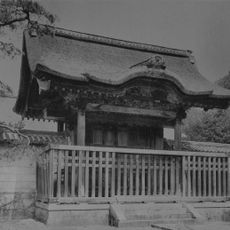
The Nakaragi Shrine stands inside the garden's only natural woodland, moved here in August 1946 when the occupation forces requisitioned the site and invoked the separation of religion and state. Beside it grows a renri-no-eda, a fir and a mukunoki fused into one trunk, visited as a luck-in-love spot.
The community of curious travelers
AroundUs brings together thousands of curated places, local tips, and hidden gems, enriched daily by 93,136 contributors worldwide.