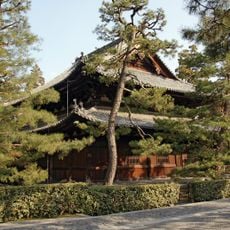
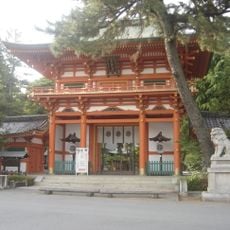
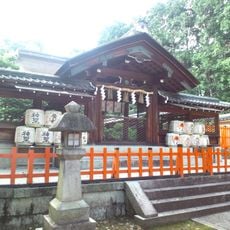
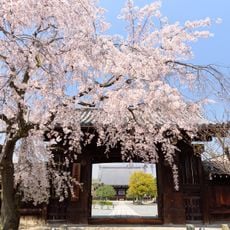
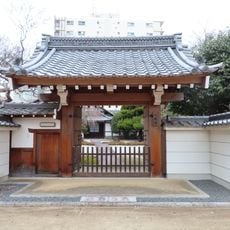
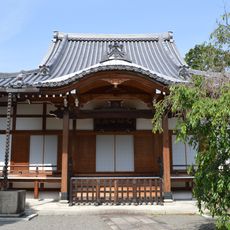
Daisen-in, Zen sub-temple and dry landscape garden in Kita-ku, Kyoto, Japan
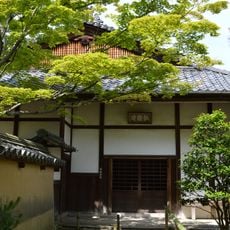
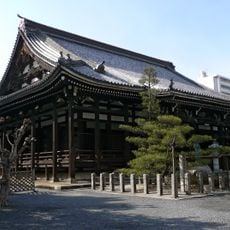
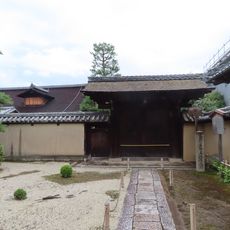
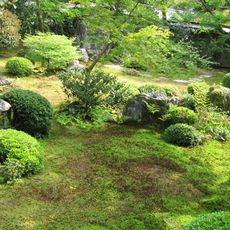
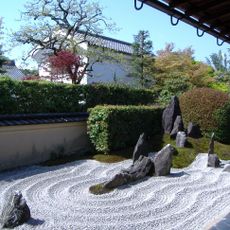
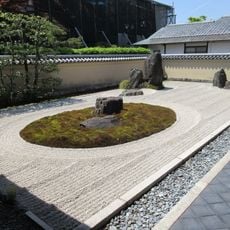
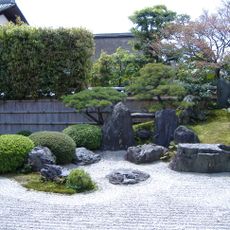
Daisen-in is a sub-temple of Daitoku-ji in Kita-ku, Kyoto, founded by Kogaku Sōkō and built between 1509 and 1513. Its main garden is an L-shaped strip 3.7 metres wide northeast of the shoin, with rocks suggesting mountains and a waterfall, clipped shrubs for a forest, and raked white gravel for a river that splits into a Middle Sea and an Ocean. The hojo, built in 1513 as Sōkō's retirement residence, has Japan's oldest alcove (tokonoma) and entrance (genkan), both National Treasures.
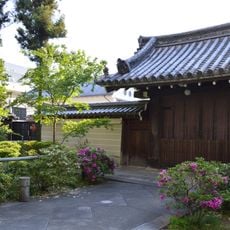
Founded in 1509 by Kogaku Soko, the 76th abbot of Daitoku-ji, Daisen-in was built between 1509 and 1513; its hojo was erected in 1513 as Soko's own retirement residence. It holds the oldest known tokonoma alcove and the oldest genkan entrance in Japan, both designated National Treasures. The garden was laid out by Soko and restored with white sand in 1953; the covered walkway crossing it was rebuilt in 1961.
The garden's rocks and raked gravel depict a river flowing from a waterfall between Mount Horai and a turtle island toward two seas. A stone boat drifts downstream while a turtle stone struggles upstream. The name Daisen-in means "Academy of the Great Immortals," and a camellia in the garden stands for the Eight Immortals of Daoist legend.
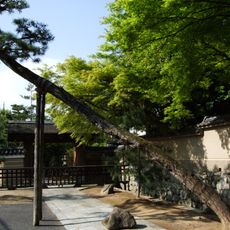
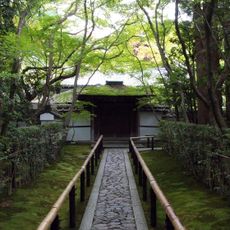
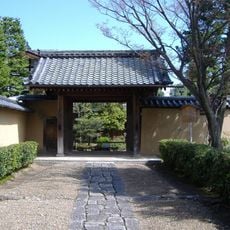
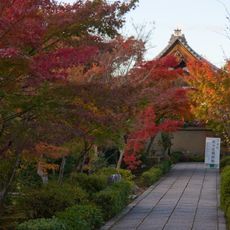
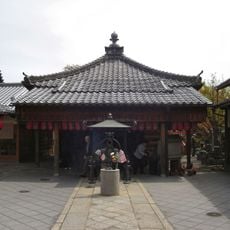
Access is through the larger Daitoku-ji grounds, where pathways clearly connect the various temple buildings. Good footwear is useful, since surfaces around the gardens vary in their condition and composition.
The garden's narrow strip, only 3.7 metres wide, packs a symbolic landscape: a stone shaped like a treasure boat drifting downstream and another like a turtle struggling upstream. German author Gunter Nitschke reads the boat as accumulated adult experience and the turtle as futile efforts to return to youth.
The community of curious travelers
AroundUs brings together thousands of curated places, local tips, and hidden gems, enriched daily by 93,488 contributors worldwide.