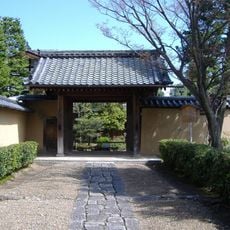
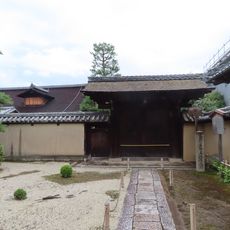
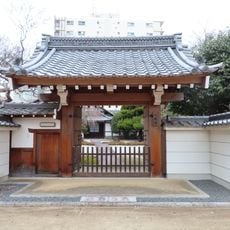
Kōrin-in, Zen temple within Daitoku-ji complex in Kita-ku, Japan
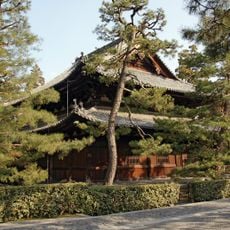
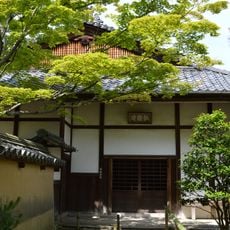
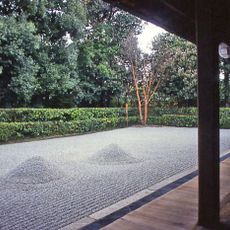
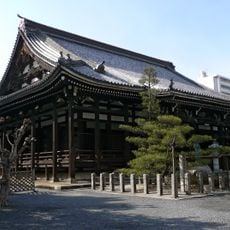
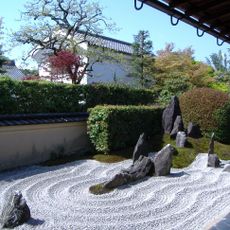
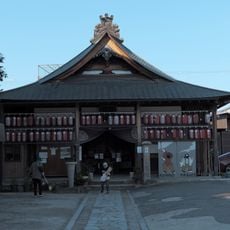
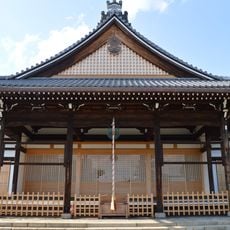
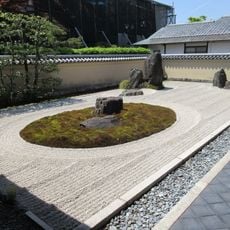
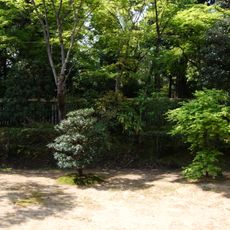
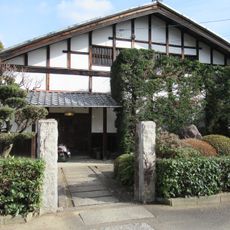
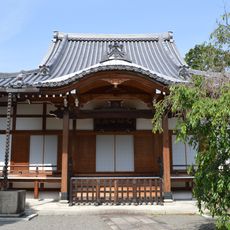
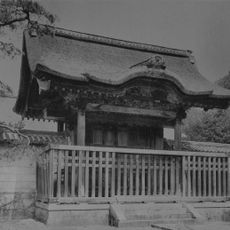
Kōrin-in is a sub-temple of Daitoku-ji whose main hall (hōjō) is a Muromachi-period building with an irimoya-zukuri roof of cypress bark and a floor-level alcove said to be the first of its kind in Japan. Its 20 sliding-door paintings were made by the ink painter Muraishi Beisai of Kurume, Fukuoka. The hōjō front garden, a dry landscape of white sand and stone groups, was restored in 1978 by Nakane Kinsaku.
Hatakeyama Yoshifusa, military governor of Noto province, founded Kōrin-in during the Daiei era (1521–1528), naming it after his own posthumous name; some sources give 1533. The main hall burned during the Tenbun era and was rebuilt. In 1581 Maeda Toshiie, who ruled Noto after the Hatakeyama, repaired the temple, which then became the Maeda family's burial temple.
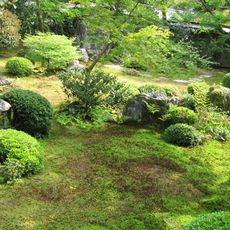
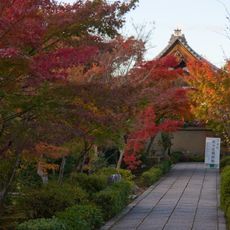
The garden draws from Chinese landscape principles, with flowering shrubs suggesting mountain ranges and stones representing distant islands in a carefully composed scene. Visitors moving through the grounds experience how each viewpoint reveals a different relationship between these elements.
The temple opens only during select weeks of peak season, so check the dates before planning your visit. The grounds are compact and can be explored at a leisurely pace in a short time.
The hoist floor of the main hall is said to be the first tokonoma alcove in Japan. The hall once held sliding-screen paintings by Kanō Motonobu and Tosa Mitsunobu, lost in the turmoil between the end of the Edo period and the Meiji Restoration; the twenty fusuma panels now there were painted by Muraishi Beisai of Kurume, Fukuoka.
The community of curious travelers
AroundUs brings together thousands of curated places, local tips, and hidden gems, enriched daily by 94,364 contributors worldwide.