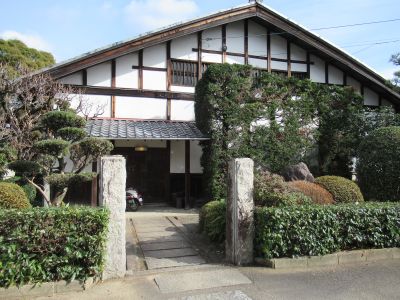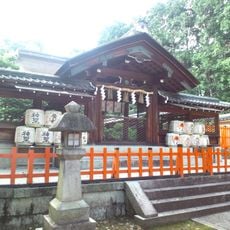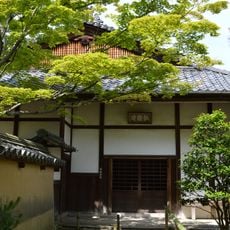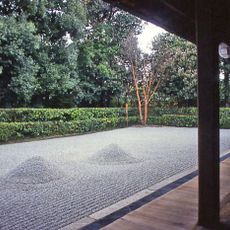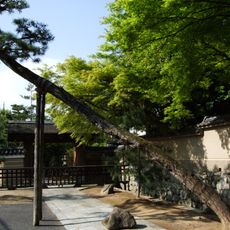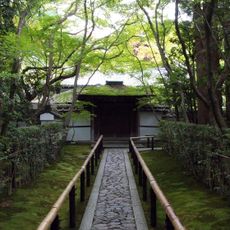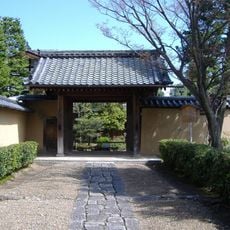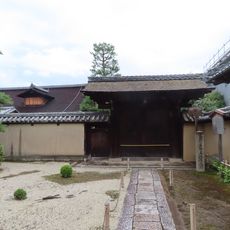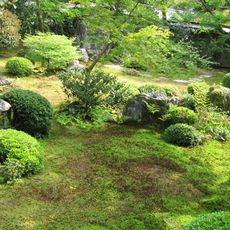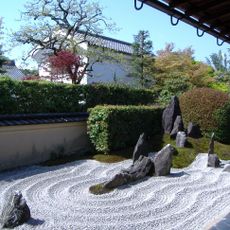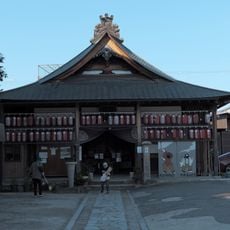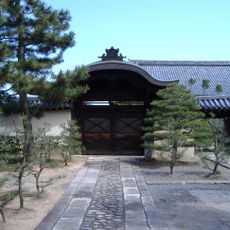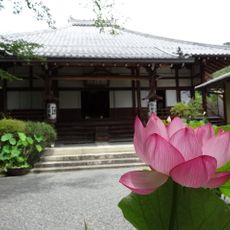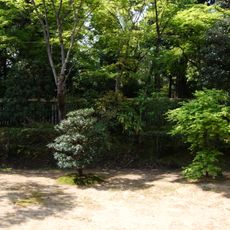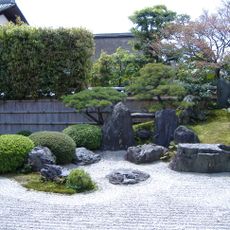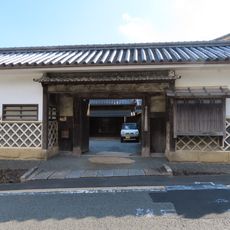
Konren-ji, Buddhist temple in Kita-ku, Japan
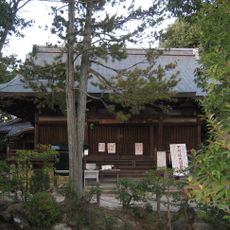
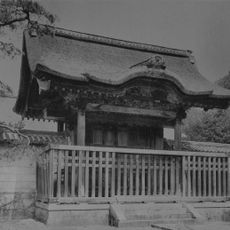
Konren-ji is a Jishū (Ji-shū) temple of the Shijō-ha branch in Takagamine Fujibayashi-chō, Kita-ku, Kyoto, with the mountain name Kinryō-zan and Amida Nyorai as its principal image. It is also called Shijō Dōjō after its former site on Shijō-Kyōgoku. Its former main hall was dismantled for the 1928 move to Takagamine and never rebuilt there; it was later bought by the Shinshū Ōtani-ha temple Kuwanai Betsuin Hontsū-ji and serves as that temple's main hall.
Konren-ji began in 1311 when the monk Shinkan, of the Ji-shū, renamed the Gidarin-ji temple after prayers for the safe birth of the future Emperor Kōgon. In 1356 Sasaki Dōyō donated land at Shijō-Kyōgoku, and the temple became a centre of linked verse and flower arranging. It burned in 1424 amid a dispute with Kongō-ji, and moved to Takagamine in 1928.
The temple's name comes from Jōtarin-ji, which was renamed Konren-ji after the monk Shinkan's prayers helped in the birth of Emperor Kōgon in 1311. Its successive abbots took the name Jōami. The temple was also called Shijō Dōjō, and linked to it is Somen-dō, a subtemple that remains in Nakano-chō near Shinkyōgoku, where a stone monument marks the site of Ippen's distribution of prayer slips.
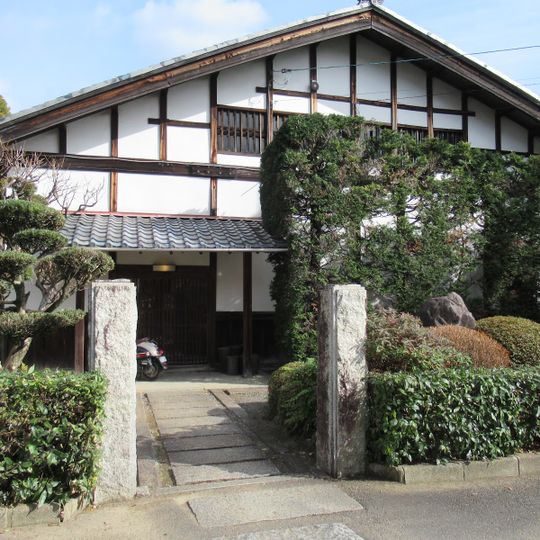
Konren-ji stands in Takagamine, Kita-ku, at the northern edge of Kyoto, far from the old Shijō site downtown; the former subtemple Sōmedono-in (Sōmedono Jizō-in) survives near Shijō-Kyōgoku in Nakagyō-ku. The temple keeps the Jōa Shōnin ekotoba-den and other documents, so check opening arrangements before travelling out.
The temple's former main hall was dismantled for the 1928 move to Takagamine but never rebuilt; after the war it was bought by the Shinshū Ōtani-ha Kuwana Betsuin Honshō-ji, whose buildings had burned in the Kuwana air raids, and it still serves as that temple's main hall in Mie Prefecture.
The community of curious travelers
AroundUs brings together thousands of curated places, local tips, and hidden gems, enriched daily by 93,465 contributors worldwide.