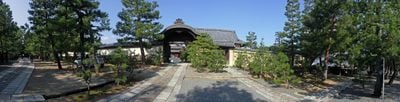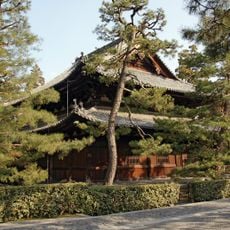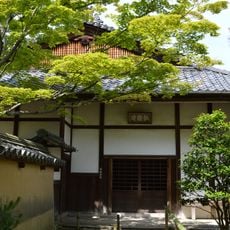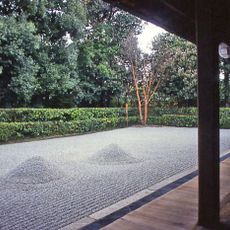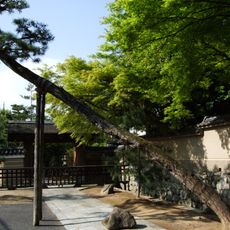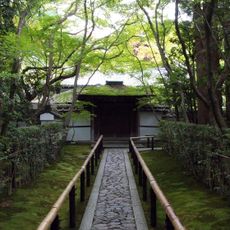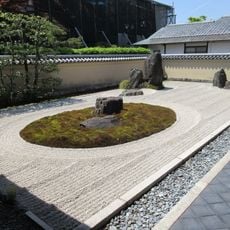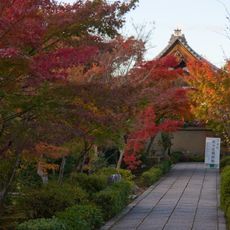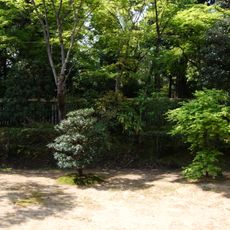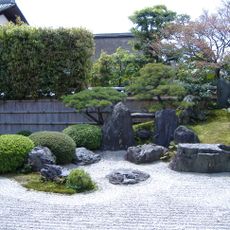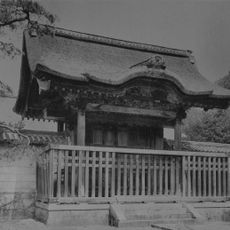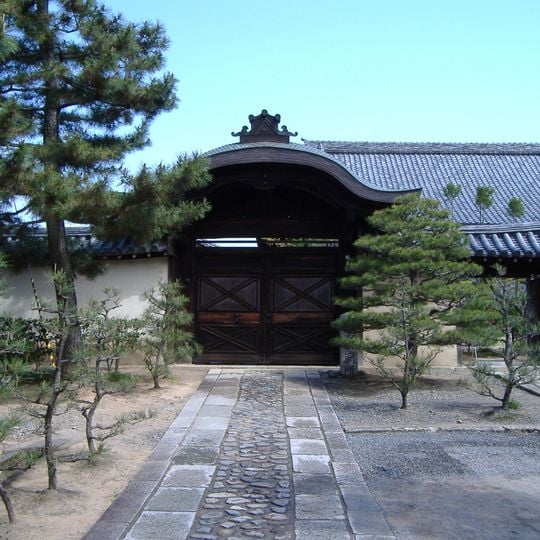
Sōken-in, Buddhist temple in Kita-ku, Japan
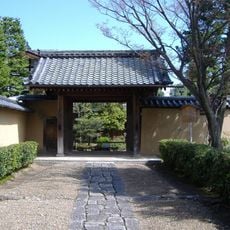
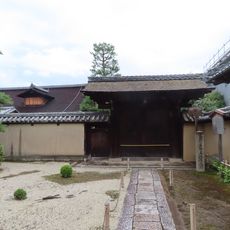
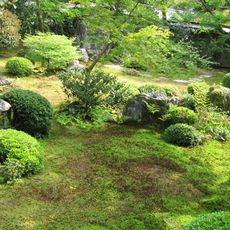
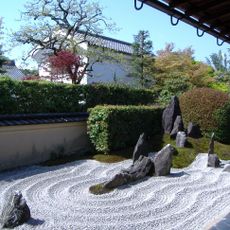
Sōken-in is a Buddhist temple in Kyoto's Kita-ku district, situated within the Daitoku-ji complex and displaying traditional Japanese construction methods. The buildings feature wooden architecture and meditation halls typical of Zen Buddhist design.
Toyotomi Hideyoshi held Nobunaga's funeral at Daitoku-ji in 1582, burning a camphor-wood statue in place of the body. He founded Sōken-in in 1583, before the first anniversary, as Nobunaga's mortuary temple, with Kokei Sōchin as founding abbot. The name comes from Nobunaga's posthumous name. The precinct was ruined in the Meiji period and restored in the Taishō era.
The temple's name comes from Oda Nobunaga's posthumous name, Sōken-in. Its tea rooms include Kōun-ken, favoured by the 13th Sen Sōtan of the Omotesenke school, and Hōan, whose plaque was brushed by the 14th, Jikisai. A wabiske camellia said to be about 400 years old and loved by Toyotomi Hideyoshi is a Kyoto-designated natural monument.
The temple is accessible via Kyoto City Subway's Kitaoji Station or by buses 204 and 206 stopping at Daitokuji-mae. Since it is part of a larger temple complex, allowing enough time to explore the area and wearing comfortable shoes is recommended.
The temple's 400-year-old wabiske camellia, said to be the oldest Higo-wabisuke in Japan and a Kyoto City Natural Monument, was reportedly a favourite of Toyotomi Hideyoshi. The well beside it, Kiyomasa's Well, is lined with a stone block that Kato Kiyomasa is said to have brought back from the Korean campaigns.
The community of curious travelers
AroundUs brings together thousands of curated places, local tips, and hidden gems, enriched daily by 94,354 contributors worldwide.