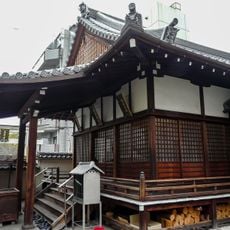
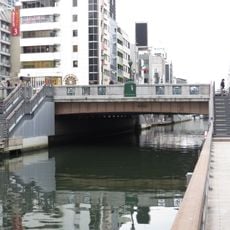
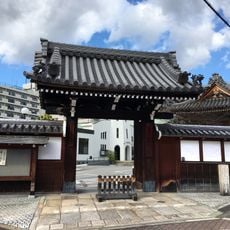
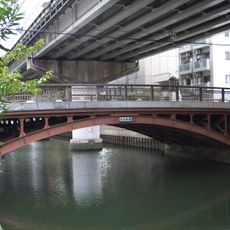
法案寺, Buddhist temple in Chūō-ku, Japan.
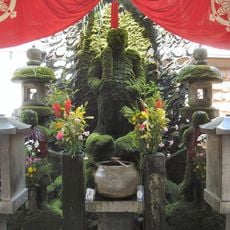
Hōanji (formally Hōanji Nanbō) is a Shingon temple of the Kōyasan branch in Chūō-ku, Osaka. Its main hall, the Shōten-dō, enshrines Daishō Kangiten, and a separate Benzaiten hall houses the Osaka Seven Lucky Gods Benzaiten. The grounds also contain a thirteen-story stone pagoda and a Kusunoki Inari shrine.
Founded by Prince Shōtoku in the Suiko era at Shigino, the temple became the bettō-ji of Ikutama Shrine and was rebuilt in the Ōei period under Emperor Shōkō's order. It burned in the Ishiyama War and again in 1615, then led the ten Ikutama cloisters as their head temple. In 1879 the priest Eitatsu moved it to Shimanouchi, where it burned in the March 1945 air raid.
The temple is the bane of Osaka's Seven Lucky Gods pilgrimage, where Benzaiten is venerated; the main deity is Daishō Kangiten, called "Nihonbashi no Shōten" locally. The temple's red seal and the Kangiten yokusen oil-bath amulet bear a treasure-sack stamp reading "fortune, longevity, love". The wooden Shō-Kannon standing statue, a late Heian work, is a nationally designated Important Cultural Property and is unveiled each year from 1 to 7 January.
The temple is in Shimano-uchi 2-chome, about five minutes on foot north from Nipponbashi Station (Osaka Metro and Kintetsu). The main hall, Benten-dō and the thirteen-storey stone tower stand close together on a small precinct, so the visit is short. The sacred Kannon image is shown only from 1 to 7 January.
The honzon is Daishō Kangiten, known locally as "Nihonbashi no Shōten" after the district. Temple seals and the oil-bathing amulet carry a treasure-sack stamp reading "fuku, ju, ai" — fortune, longevity, love — the three benefits attributed to this Kangiten.
The community of curious travelers
AroundUs brings together thousands of curated places, local tips, and hidden gems, enriched daily by 94,257 contributors worldwide.