Hohokabe-jinja, Shinto shrine in Japan
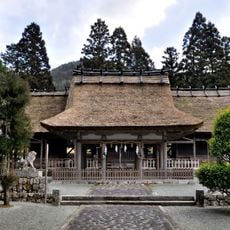
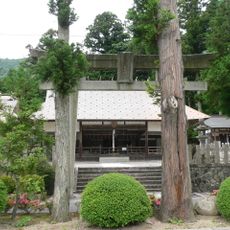
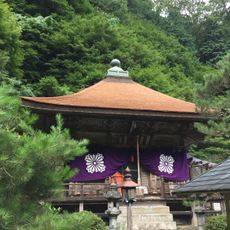
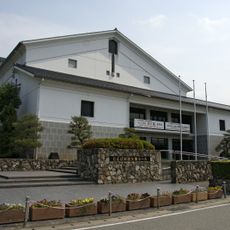
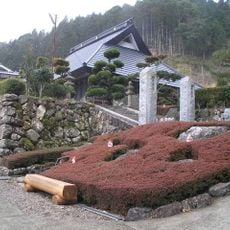
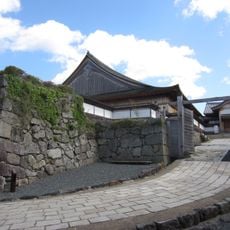
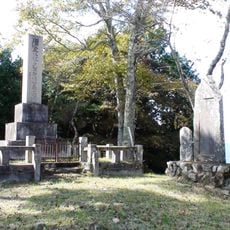
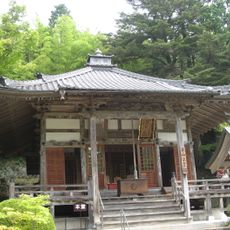
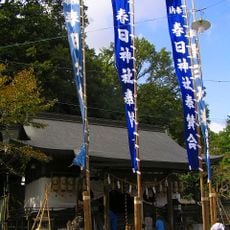
Hohokabe-jinja is a Shinto shrine in the Hohokabe and Miyanomae districts of Tamba-Sasayama, Hyogo Prefecture, dedicated to Susanoo. Its grounds hold a bronze torii, and the shrine keeps 36 wall panels, 24 of them by Nagasawa Roshu, plus three hanging Buddha images of the Yakushi triad. It is also called "Tamba's Gion-san".
Shrine tradition gives several founding accounts: the year 680, the Jōgan era (859–877), and a transfer of the deity from Kyoto's Gion Shrine (now Yasaka Shrine) in either 958 or 1098; another tradition holds that a shrine was built at a resting place during the relocation of Hiromine Shrine. The Hohokabe clan, local developers, venerated it, and in 1427 Hohokabe Munemitsu donated a wooden Nikko-Gekko hanging image, followed in 1517 by a wooden Yakushi hanging image from the nun Myōkō. It later became a prayer site of the Hatano clan, and in the Edo period Maeda Shigekatsu and Matsudaira Yasushige donated a bridge and torii.
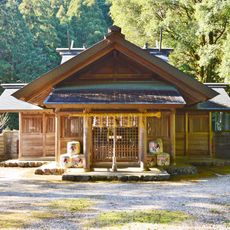
The shrine is dedicated to Susanoo, a kami associated with storms and the sea in Shinto tradition. Visitors can see small offerings left by locals and wooden boards where people write personal wishes and hang them near the main hall.
The shrine can be reached by bus from JR Sasayama-guchi Station followed by a short walk, and is also easy to reach by car. Going in the morning tends to be quieter, as the grounds see more visitors as the day goes on.
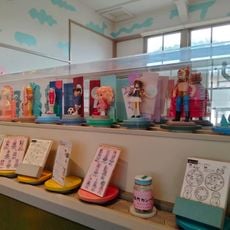
The shrine's Gion festival features eight dashi floats called Danjiriyama, one from each of the eight constituent settlements. Every third year, a conical float called Kiurayama joins and hosts a puppet play known as Dekonobou. Both the festival and its puppets are designated folk cultural properties.
The community of curious travelers
AroundUs brings together thousands of curated places, local tips, and hidden gems, enriched daily by 93,661 contributors worldwide.