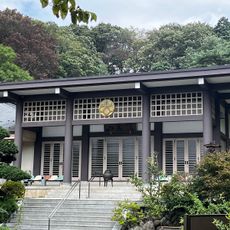
Takiyama Castle, Hill castle in Takatsukimachi, Japan
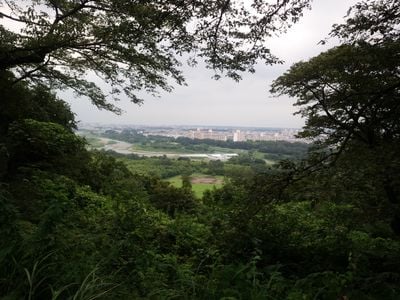
Takiyama Castle is a hill fortification in Takatsukimachi, Japan, positioned on a military ridge where the Tama and Aki Rivers meet from the south. The site sits at an elevation of 160 meters and spreads across multiple terraces separated by earthen walls and defensive ditches.
Ōishi Sadashige built Takiyama Castle in 1521, replacing the nearby Takatsuki stronghold. After the Hōjō defeat of the Uesugi at Kawagoe in 1546, the Ōishi submitted and Hōjō Ujiteru took the castle, adding the Ninomaru, Sannomaru and Komiya enclosures with dry moats and earthen ramparts. In 1569 a Takeda feint under Takeda Katsuyori reached the third bailey, exposing the castle's limits; Ujiteru moved to Hachiōji Castle and Takiyama was abandoned by 1584.
The castle takes its name from Mount Takiyama and once served as a control point over the Tama River valley, where local warriors monitored the movement of armies and supplies. Visitors today can still see the distinctive arrangement of earthen ramparts that shows how medieval builders integrated the natural landscape into their defensive strategy.
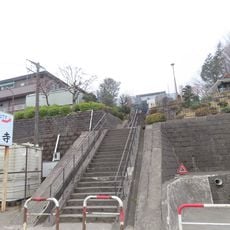
A maintained hiking trail leads visitors through the entire ruin site, with signs explaining the original function of each defensive structure along the way. The climb takes about 40 minutes and requires sturdy footwear, as some sections pass over uneven steps and narrow paths.
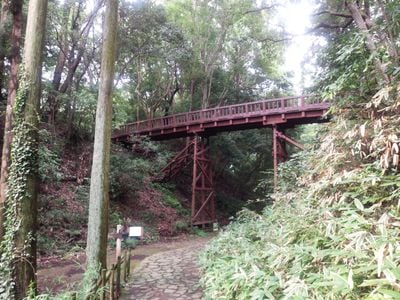
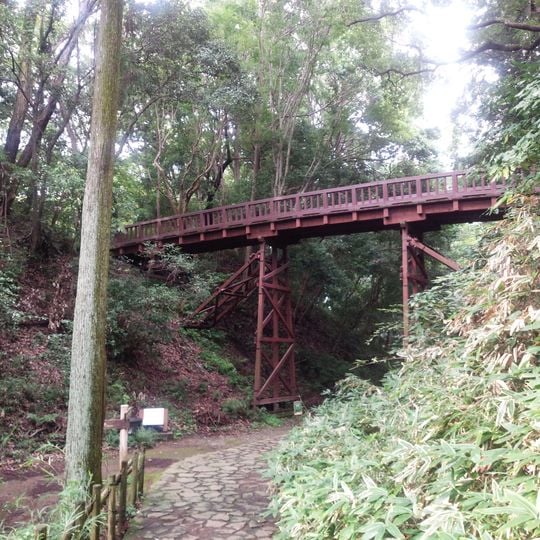
The reconstructed wooden bridge between the Honmaru and Nakanomaru enclosures is a modern addition; the original drawbridge mechanism has never been found. Excavations at the square-shaped gate of the Honmaru revealed paving of unworked river stones from the Tama River, a covered drain and earthen walls on three sides. One gate was deliberately destroyed during the castle's dismantling, though whether this happened at the move to Hachiōji Castle is unknown.
The community of curious travelers
AroundUs brings together thousands of curated places, local tips, and hidden gems, enriched daily by 93,908 contributors worldwide.