熊野神社, Shinto shrine in Japan
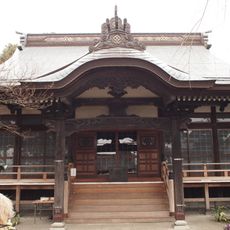
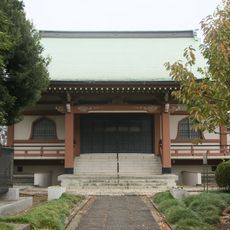
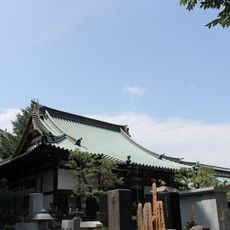
Kumano Shrine consists of a worship hall, an offering hall and a main hall built in 1873, all in the single-bay nagare-zukuri style with carvings on the buildings. A kagura hall measuring about 10 m wide and 7.2 m deep was added in 1934. Seven subsidiary shrines stand on the grounds, including Shinsha, Suwasha and Inarisha.
The shrine was founded during the Heian period and served as a sacred place where tree-cutting was prohibited by local tradition. It was rebuilt by samurai during the Sengoku period and later restored under Tokugawa patronage in the Edo period.
The shrine's annual rites are the Kinen-sai on 18 March, the Reitai-sai on 19 September, and the Niiname-sai combined with Shichi-go-san on 23 November. Within the grounds stand seven subsidiary shrines: Shinmei, Suwa, Sanno, Inari, Hoso, Tenjin and Hachi. The shrine is dedicated to Izanagi-no-Mikoto, Izanami-no-Mikoto and Himezaka-hime-no-Mikoto.
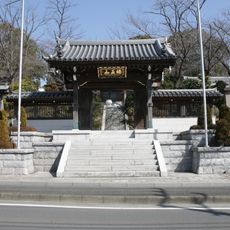
The shrine grounds are entered through a torii gate; the worship hall, offering hall and main hall stand together as one connected building, with the kagura hall to the side. Seven small subsidiary shrines, including Inari and Tenjin, are grouped within the precinct. The 170-year-old hornbeam stands on the grounds. The annual festival is held on 19 September.
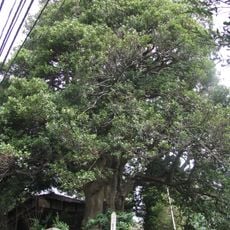
The tree on the grounds is a Japanese hornbeam (akashide), said to be about 170 years old, not an acacia. Look for its serrated leaves and fine, layered branches near the shrine buildings.
The community of curious travelers
AroundUs brings together thousands of curated places, local tips, and hidden gems, enriched daily by 93,408 contributors worldwide.