Tashibunosho, Agricultural estate in Bungotakada, Japan
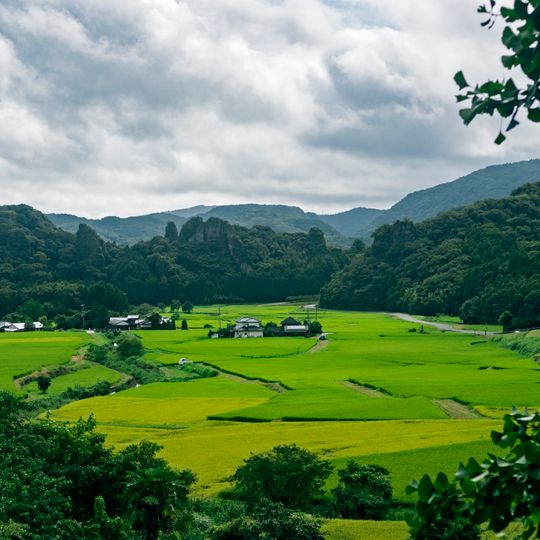
Tashibunosho is a historic agricultural estate in Bungotakada, Japan, made up of terraced rice paddies that follow the natural shape of the valley. The fields are still active and worked entirely by hand, without the use of modern machinery.
Tashibunosho was founded in the 11th century as one of twenty-four estates under the management of the Mirokuji-Usa Jingu complex, a relationship that lasted until the 16th century. When temple administration came to an end, control of the land passed into different hands and its use shifted accordingly.
Farmers once used the position of the sun over the mountain peaks to decide when to plant and when to harvest, passing this knowledge down through generations. You can still see this bond with the land today in the way the fields are tended by hand, following the rhythm of the seasons.
The terraced fields are best seen from the paths that run along the edges of the valley, where you get a clear view of how the paddies curve with the hillside. These are working fields, so staying on marked paths and keeping a respectful distance from the farmers makes the visit go smoothly.
While most estates in the region were reorganized into straight, square plots to make farming easier, this one kept its original curved layout. That makes it one of the few places where you can still see what rice paddies looked like before modern agricultural standards changed the shape of the land.
The community of curious travelers
AroundUs brings together thousands of curated places, local tips, and hidden gems, enriched daily by 91,372 contributors worldwide.