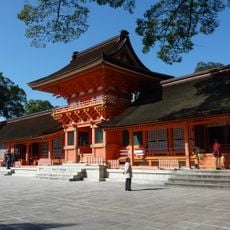
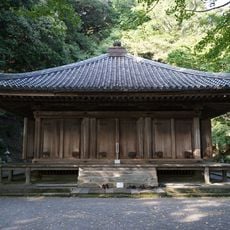
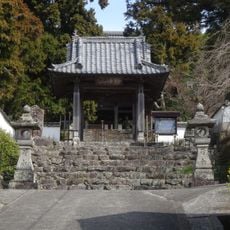
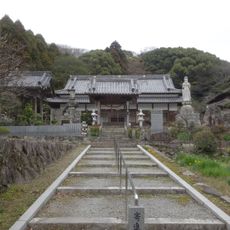
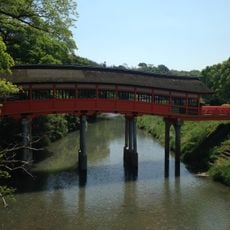
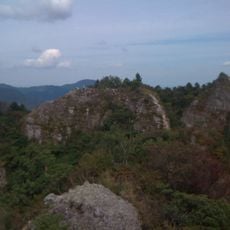
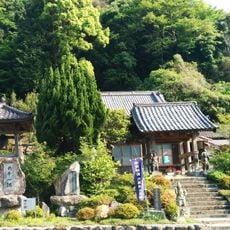
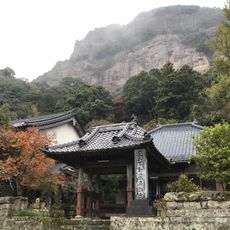
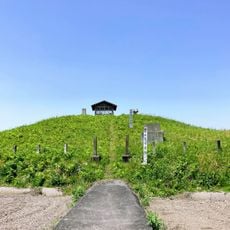
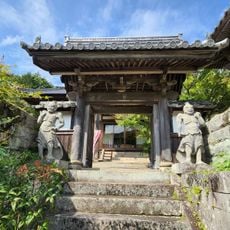
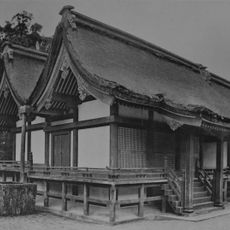
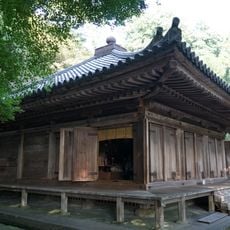
Maki Ōdō, Buddhist temple in Bungotakada, Japan.
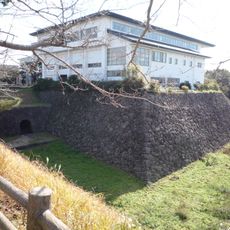
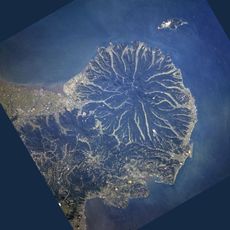
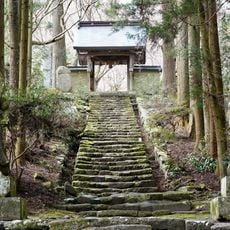
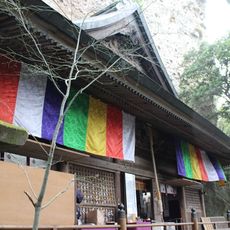
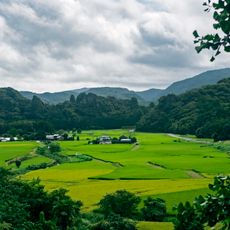
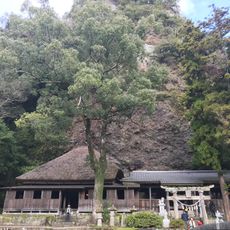
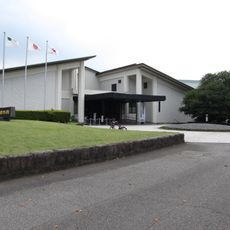
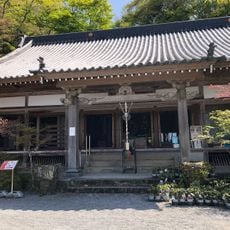
Maki Ōdō is a Buddhist temple in Bungotakada, a town on the Kunisaki Peninsula in northeastern Kyushu, Japan. The complex consists of a main hall dating from the Edo period and a mid-20th century exhibition building that houses religious artworks and wooden statues.
Maki Ōdō is said to have been one of the halls of Denjō-ji, a temple founded in 718 by the bodhisattva Ninmon and counted among the eight head temples of the Rokugō Manzan network. Denjō-ji was the largest of these, with a full seven-hall complex and 36 sub-temples in the Tashibu area, until a fire destroyed it about 700 years ago. The present small Hondō was rebuilt in the Edo period, and the 1955 storehouse gathers nine Heian-period statues from the former sub-temples.
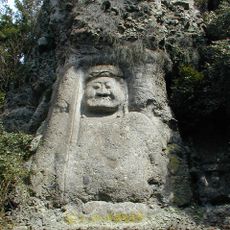
Nine wooden statues from the Heian period show different Buddhist deities, with Amida Nyorai at the center surrounded by four Deva figures. Daiitoku Myoo is depicted riding a white buffalo, which is a rare iconographic detail in Japan.
The complex has several areas, so it is worth allowing enough time to visit both the main hall and the exhibition space without rushing. Going at a quieter time of day makes it easier to look at the statues closely.
The temple's Fudō Myōō stands with two attendant figures, a wooden sculpture counted among the largest of its kind in Japan. The same exhibition hall holds a Daiitoku Myōō on a white ox, six-faced, six-armed and six-legged, the largest such image in the country.
The community of curious travelers
AroundUs brings together thousands of curated places, local tips, and hidden gems, enriched daily by 93,850 contributors worldwide.