Hiji Castle, Japanese castle in Hiji, Japan
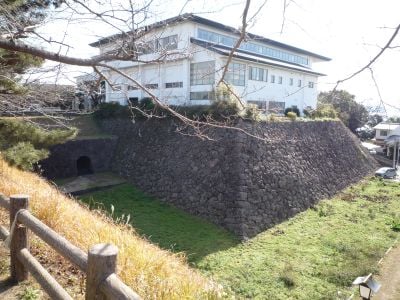
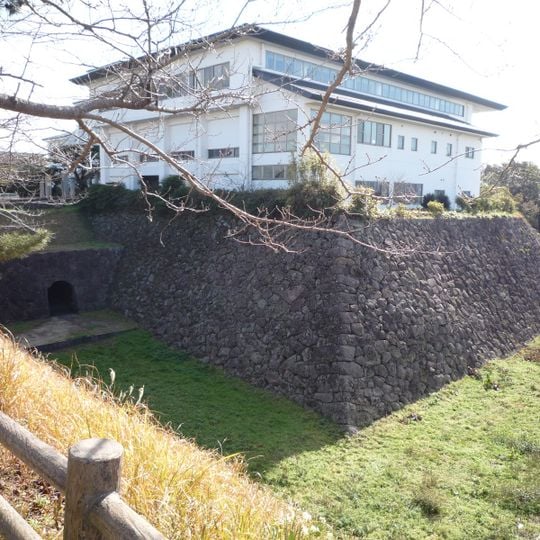
Hiji Castle is a hilltop fortification overlooking Beppu Bay, built as a terraced flatland-mountain castle with the honmaru at the tip of a plateau and the ninomaru wrapping it on three sides. Its stone walls, laid in the nozura-zumi technique by Ano Ri'emon, survive in large part, and the white multi-storey building of Hiji Elementary School now stands on the honmaru.
Construction of the fortress began in 1601 under Kinoshita Nobutoshi, who received architectural guidance from his brother-in-law Hosokawa Tadaoki. This partnership shaped the design and strategic importance of the stronghold within the region.
The castle's alternative name, Yōkoku Castle, was chosen by the third lord Kinoshita Toshinaga, who took it from the Chinese classics Shujing or Huainanzi. The castle bell was cast on his orders. Near the southern tip of the grounds, a small shrine marks where a wooden coffin and weapons were found in 1960 during coastal path construction, believed to be a human sacrifice from the 1601 building works.
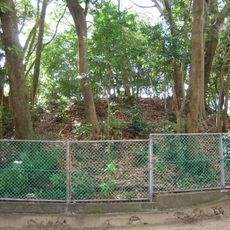
The castle ruins stand on a plateau above Beppu Bay, with Hiji Elementary School occupying part of the former honmaru. The stone walls of the honmaru and the earthen bridge with its plastered wall remain; some eastern walls were removed when the school was expanded. The relocated gate tower and the Kimon tower can be seen in the ninomaru area.
The surviving Kimon yagura is a two-storey tower with a five-sided plan, its corner cut away to avoid the unlucky northeast direction. It was moved to the grounds of the Hiji Town History Museum, near where the moon-viewing tower once stood, not at its original position. It is a designated tangible cultural property of Hiji.
The community of curious travelers
AroundUs brings together thousands of curated places, local tips, and hidden gems, enriched daily by 94,581 contributors worldwide.